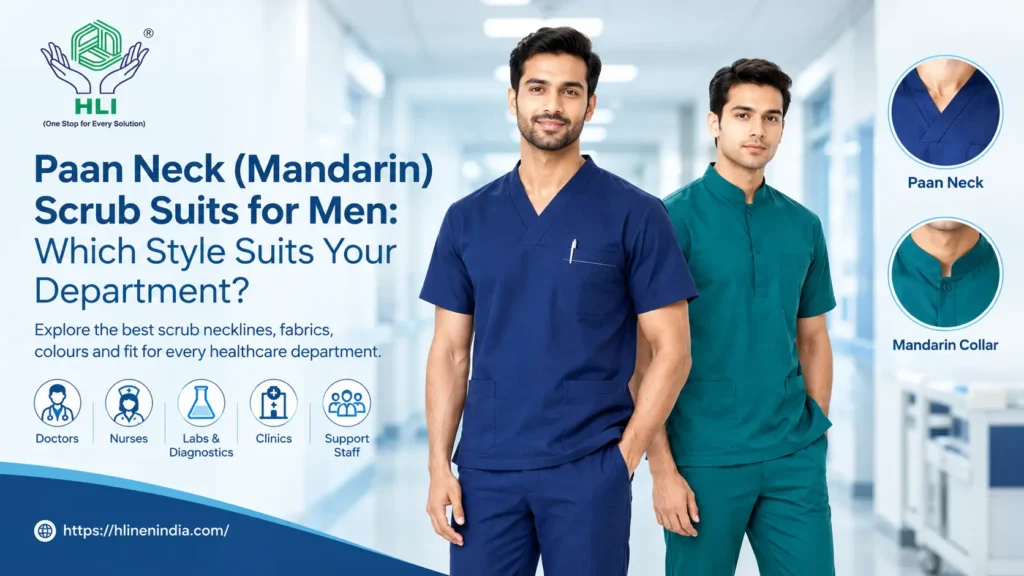

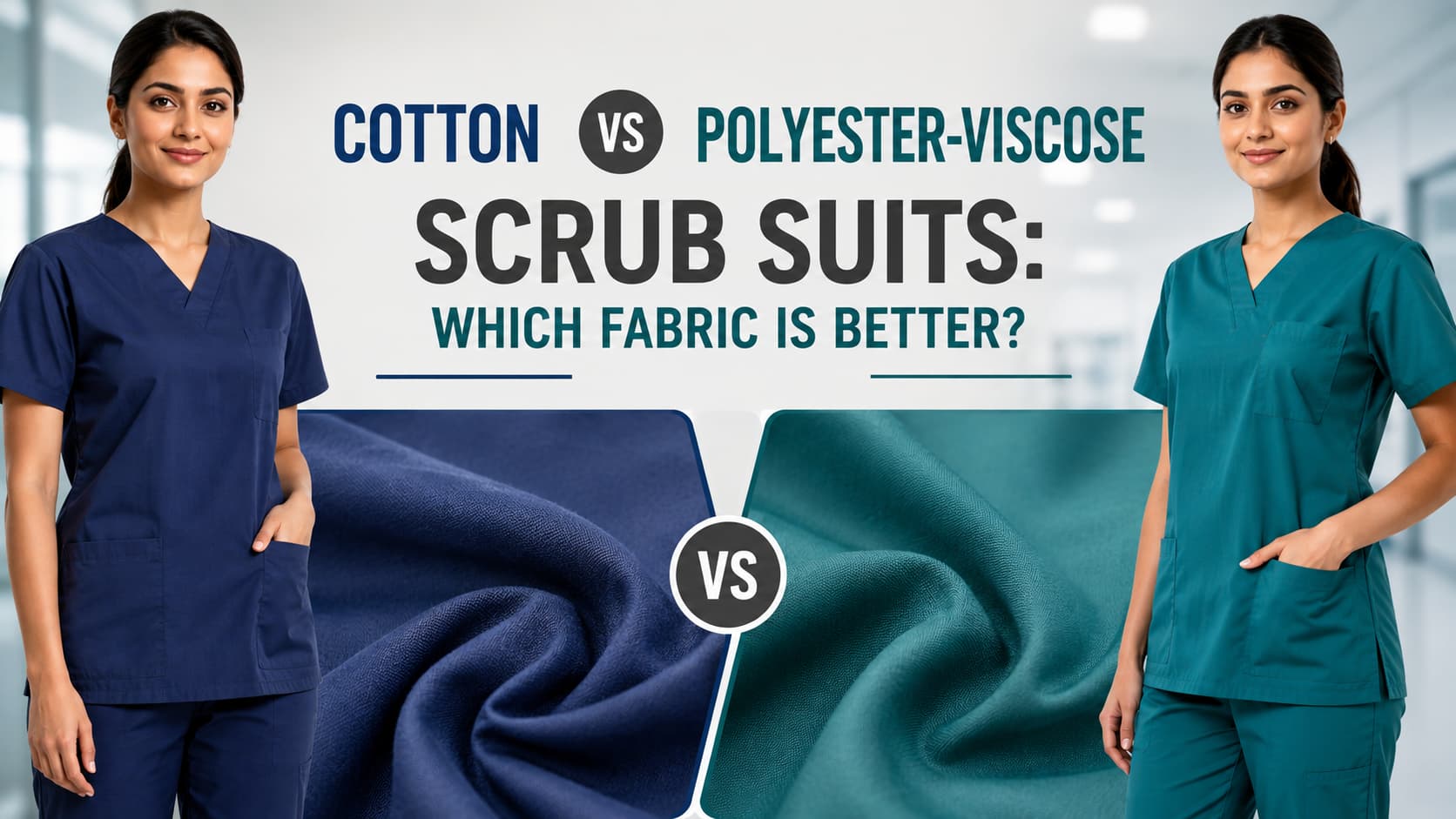
Choosing the right fabric is one of the most important decisions when buying medical scrub suits. Doctors, nurses, surgeons and healthcare staff wear scrubs for long hours and wash them frequently, so the fabric needs to provide a good balance of comfort, durability and easy maintenance.
Two commonly considered options are cotton and polyester-viscose (PV). But which one is better for hospital and clinic uniforms? Let’s compare them.
Cotton Scrub Suits
Cotton is a natural fibre known for its softness and breathability. It is a popular choice for healthcare professionals who prioritise comfort during long working hours.
Advantages of Cotton Scrubs
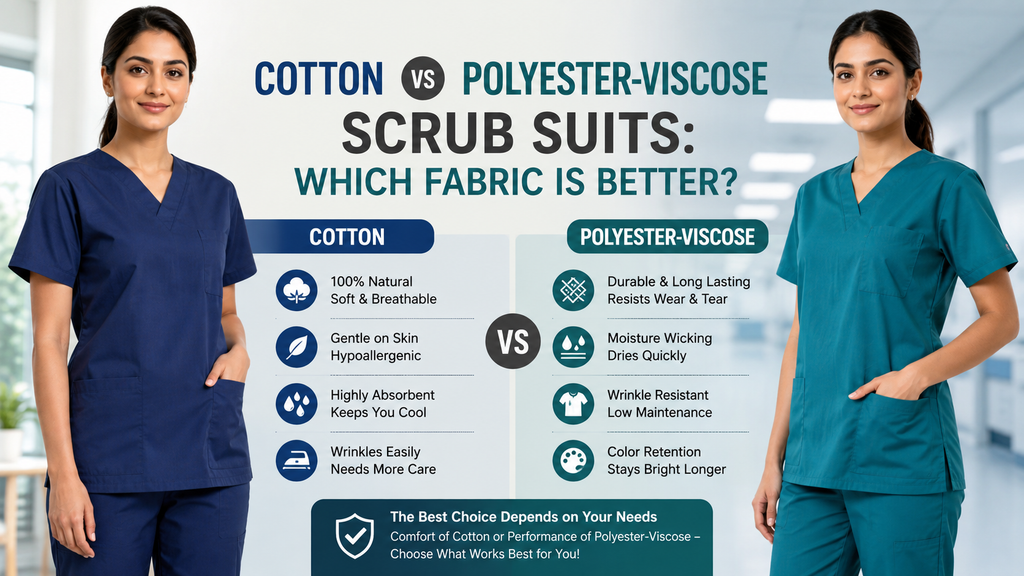
- Soft and comfortable: Cotton feels gentle against the skin.
- Breathable: It allows air circulation and can be comfortable in warm environments.
- Good moisture absorption: Cotton absorbs moisture effectively.
- Natural fabric: Suitable for people who prefer natural fibres.
- Comfortable for long shifts: Its soft feel can make it suitable for extended wear.
Limitations of Cotton Scrubs
Cotton can require more care compared with blended fabrics. It may also shrink after washing, wrinkle more easily and take longer to dry.
For hospitals with frequent industrial laundering, these factors should be considered before selecting 100% cotton uniforms.
Polyester-Viscose Scrub Suits
Polyester-viscose is a blended fabric that combines polyester with viscose. It is widely used for professional uniforms because it balances durability and comfort.
Advantages of Polyester-Viscose Scrubs
- Durable: Polyester helps improve fabric strength and wear resistance.
- Easy to maintain: PV fabric generally requires less ironing and care.
- Good shape retention: The fabric can maintain its appearance through regular use.
- Quick drying: It can dry faster than heavier cotton fabrics.
- Professional appearance: PV fabrics can provide a neat and uniform finish.
- Suitable for frequent use: Its durability makes it useful for healthcare uniforms that are washed regularly.
Limitations of Polyester-Viscose Scrubs
PV fabric may not provide the same natural, breathable feel as 100% cotton. Depending on the fabric construction and blend ratio, it can also feel warmer in hot environments.
Cotton vs Polyester-Viscose: Quick Comparison
| Feature | Cotton | Polyester-Viscose |
| Comfort | Excellent | Very Good |
| Breathability | Excellent | Good |
| Durability | Good | Excellent |
| Moisture absorption | High | Moderate |
| Wrinkle resistance | Lower | Higher |
| Ease of maintenance | Moderate | High |
| Drying time | Longer | Faster |
| Frequent washing | Good | Excellent |
| Professional appearance | Good | Excellent |
Which Fabric Is Better for Hospitals?
There is no single fabric that is perfect for every healthcare environment.
Cotton scrub suits can be a good choice when softness, breathability and natural comfort are the main priorities.
Polyester-viscose scrub suits can be a better option when durability, easy maintenance, professional appearance and frequent washing are important.
For hospitals and clinics, the decision should depend on working conditions, washing frequency, staff comfort, budget and expected product life.
What Should You Check Before Buying?
Whether you choose cotton or polyester-viscose, don’t look at the fibre composition alone. Also check:
- Fabric GSM
- Fabric quality
- Stitching and finishing
- Colour fastness
- Shrinkage
- Size availability
- Pocket design
- Fit and comfort
- Washing requirements
For bulk hospital orders, requesting a sample before production can help you evaluate the fabric and garment quality.
Final Verdict
For maximum natural comfort and breathability, cotton scrub suits are an excellent choice. For hospitals looking for durability, easy maintenance and suitability for frequent washing, polyester-viscose can be a practical choice.
The best scrub suit is ultimately the one that matches your healthcare facility’s daily requirements.
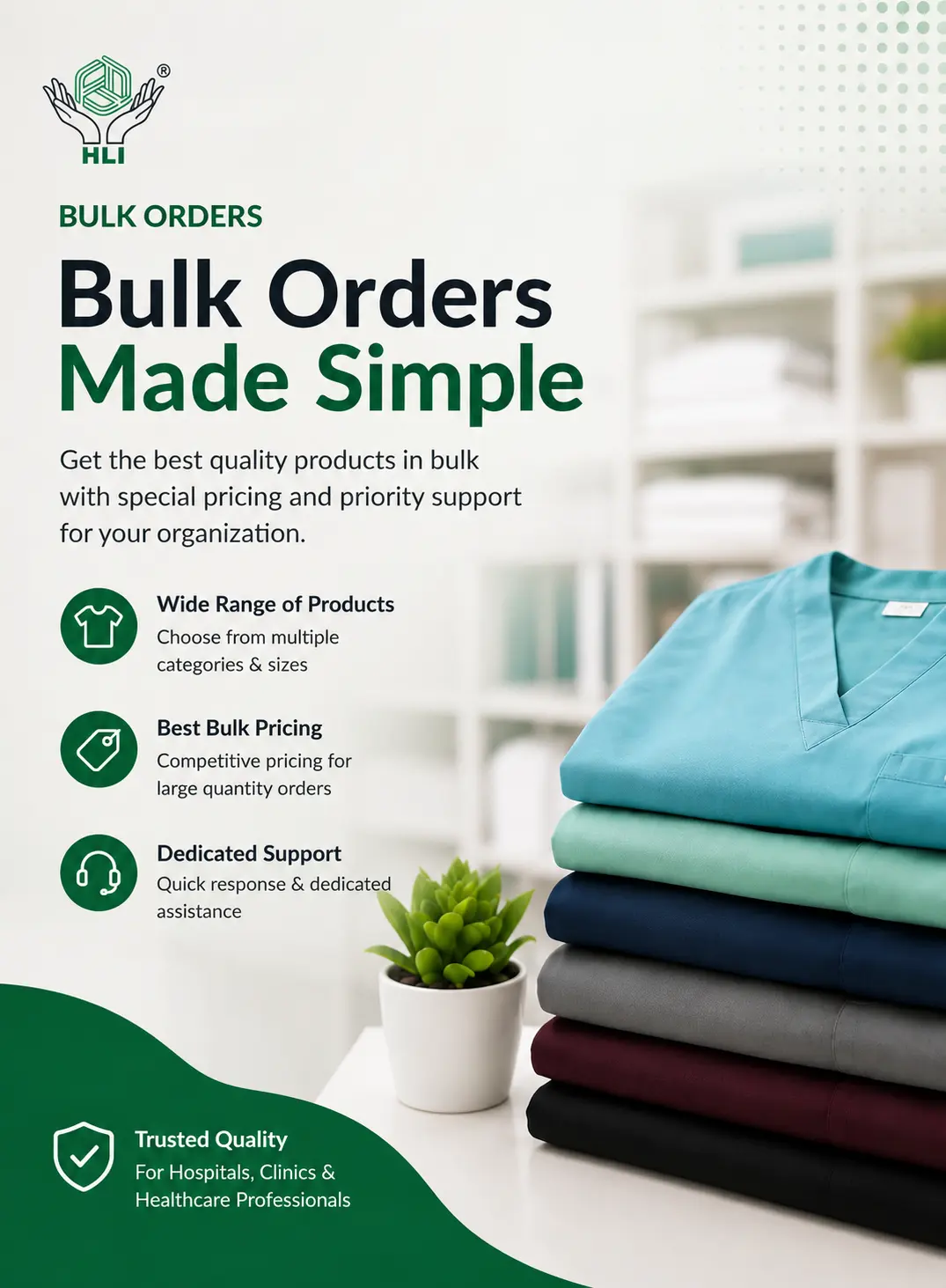
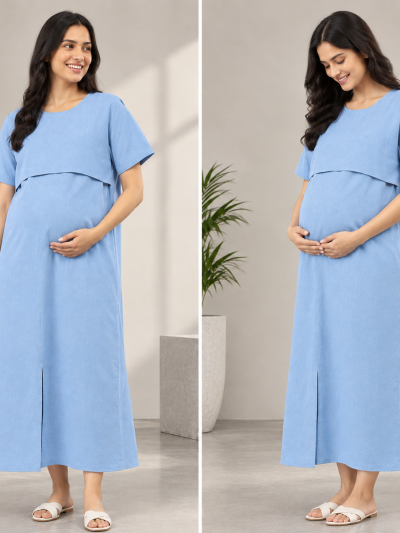
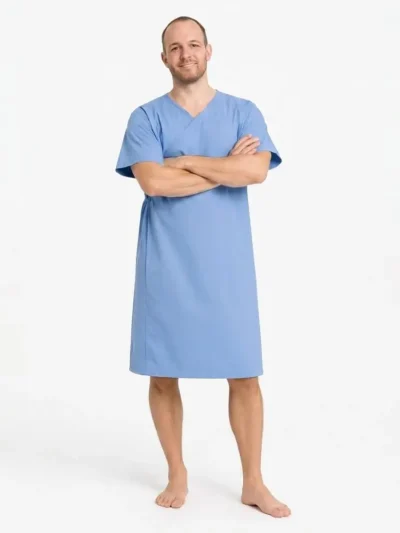
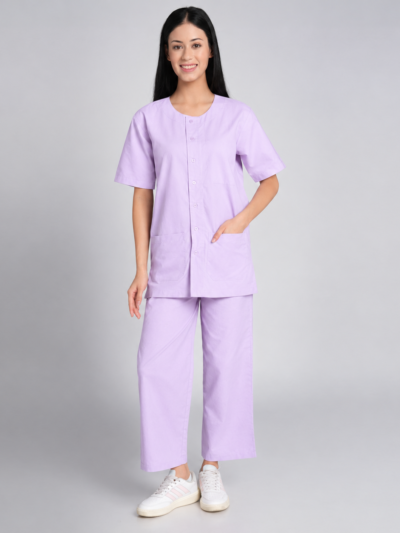
H Linen India offers medical scrub suits and hospital uniforms designed for healthcare professionals, hospitals and clinics, with options for different fabrics, colours, sizes and bulk requirements.