

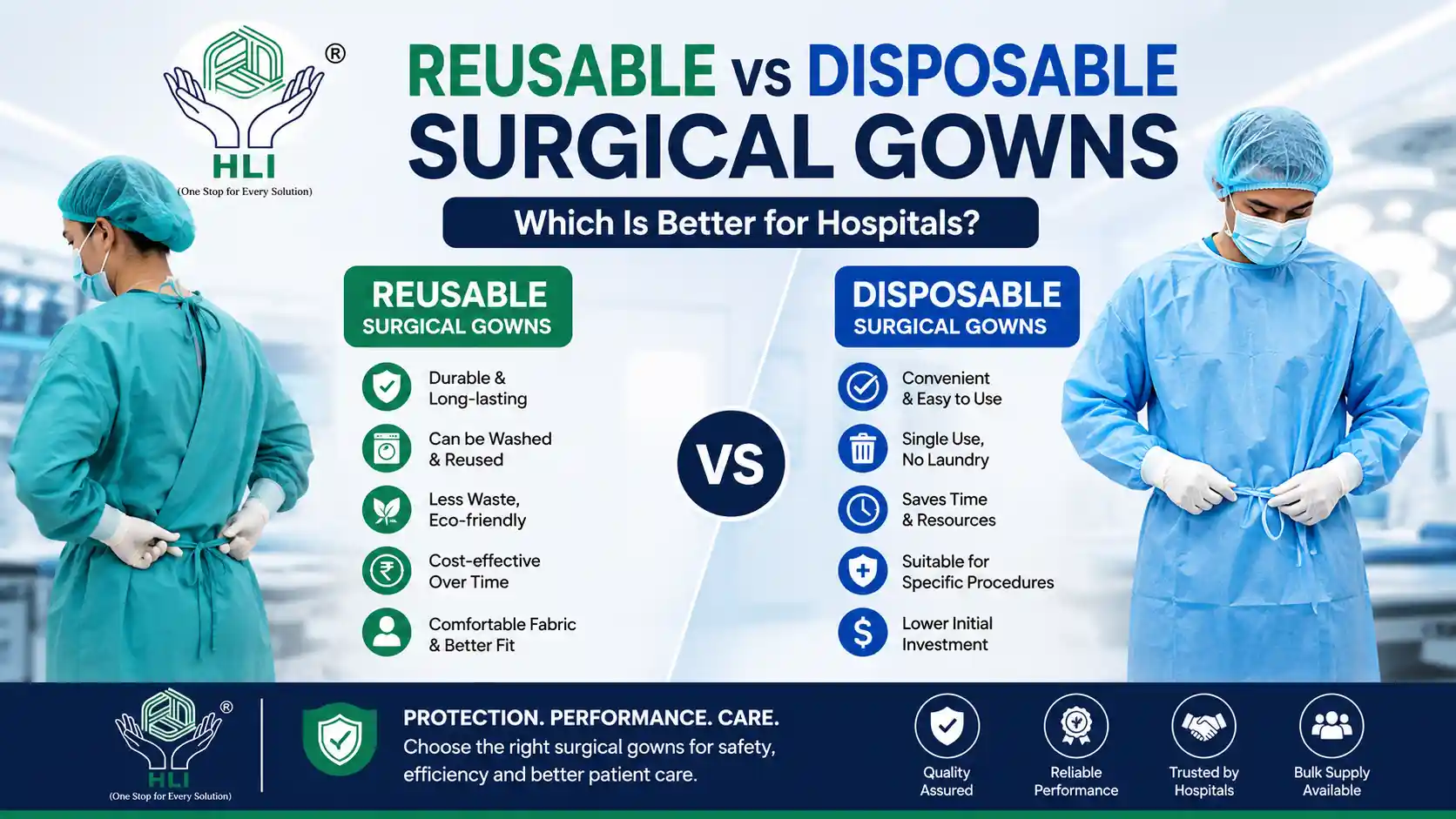
Surgical gowns are an important part of safety and infection control in hospitals and operating theatres. They help protect doctors, nurses, surgeons, and patients from blood, body fluids, and other contaminants during medical procedures.
When choosing surgical gowns, hospitals generally have two options: reusable surgical gowns and disposable surgical gowns.
But which one is better?
The answer depends on the hospital’s requirements, type of procedures, laundry facilities, budget, and infection-control practices. Let’s compare both options.
What Are Reusable Surgical Gowns?
Reusable surgical gowns are made from durable textile fabrics and are designed to be washed, inspected, sterilized when required, and used multiple times.
They are commonly used by hospitals with their own laundry facilities or professional healthcare laundry services.
Benefits of Reusable Surgical Gowns
Cost-effective over time: Although the initial purchase price can be higher, reusable gowns can provide a lower cost per use when used many times.
Durable: Good-quality reusable gowns are designed to withstand repeated washing and processing.
Less textile waste: Since the same gown can be used multiple times, reusable gowns can help reduce the amount of single-use garment waste.
Comfortable: Textile surgical gowns can provide good comfort and breathability, which can be useful during long procedures.
Suitable for regular use: They can be a practical choice for hospitals that perform surgeries regularly and have proper laundry and sterilization systems.
What Are Disposable Surgical Gowns?
Disposable surgical gowns are designed for single use. They are generally made from nonwoven or other single-use materials and are discarded after use according to the healthcare facility’s waste-management procedures.
Benefits of Disposable Surgical Gowns
Easy to use: Disposable gowns do not require washing or reprocessing.
No laundry required: They can be useful for hospitals that do not have access to healthcare laundry facilities.
Convenient: A new gown can be supplied for each use, making them convenient in certain healthcare settings.
Useful for specific procedures: Disposable gowns can be selected when single-use protection is appropriate for the procedure.
Reusable vs Disposable Surgical Gowns
| Feature | Reusable Gowns | Disposable Gowns |
|---|---|---|
| Usage | Multiple uses | Single use |
| Laundry | Required | Not required |
| Initial cost | Usually higher | Usually lower |
| Cost per use | Can be lower | Can increase with frequent use |
| Durability | Generally high | Designed for single use |
| Waste | Lower textile waste | More single-use waste |
| Processing | Washing & sterilization | Disposal |
| Best suited for | Regular hospital use | Convenient single-use applications |
Which Is More Cost-Effective?
Hospitals should look at the total cost per use, rather than only the purchase price.
Reusable gowns require costs for washing, water, electricity, detergents, labour, inspection, repairs, and sterilization where applicable.
Disposable gowns do not require laundry but need to be purchased for every use and managed through the hospital’s waste-disposal system.
For hospitals with an efficient laundry system and high surgical volume, reusable surgical gowns can offer good long-term value.
Which Is Better for Infection Control?
Both reusable and disposable surgical gowns can be suitable when they are selected for the intended procedure and used correctly.
Reusable gowns must be properly collected, washed, inspected, processed, and sterilized when required. Disposable gowns should be used and discarded according to hospital infection-control and waste-management procedures.
The most important factor is choosing a gown that provides the appropriate level of protection for the procedure.
Which Is Better for the Environment?
Disposable gowns create waste after every use. Reusable gowns can reduce single-use textile waste because they are used multiple times.
However, reusable gowns also require water, energy, detergents, and transportation for laundering. Therefore, hospitals should consider the complete lifecycle of the gown when evaluating environmental impact.
Can Hospitals Use Both?
Yes. Hospitals can use a combination of reusable and disposable surgical gowns depending on the type of procedure and operational requirements.
For example, reusable gowns may be suitable for routine surgeries, while disposable gowns can be kept for situations where single-use protection is preferred.
What Should Hospitals Consider Before Buying?
Before purchasing surgical gowns, hospitals should consider:
- Required level of protection
- Fabric quality
- Comfort and fit
- Stitching and construction
- Durability
- Laundry and sterilization requirements
- Cost per use
- Supplier reliability
- Hospital infection-control requirements
Frequently Asked Questions
Are reusable surgical gowns better than disposable gowns?
It depends on the hospital’s requirements, procedure type, laundry facilities, and budget.
Are reusable surgical gowns cost-effective?
They can be, especially when they are used multiple times and the hospital has an efficient laundry system.
Do disposable surgical gowns require washing?
No. They are designed for single use and do not require conventional laundering.
Can hospitals use both reusable and disposable gowns?
Yes. Hospitals can select either type depending on the procedure, protection requirements, and operational needs.