
The monsoon season brings much-needed rain, but for hospitals, it can also bring a less visible challenge: excess moisture. Higher humidity, slower drying, damp laundry areas, wet transport conditions and poorly ventilated storage spaces can make hospital linen management more difficult. Bed sheets, pillow covers, towels, patient gowns, nursing uniforms and OT linen all need to move through the wash-dry-store cycle efficiently. For hospitals, the goal isn’t simply to find a fabric that is called “monsoon-proof.” A better approach is to build a monsoon-ready hospital linen system around three things:
Appropriate fabric + effective drying + moisture-controlled storage.
This matters because clean healthcare textiles need to be protected from dust, soil and contamination during storage and transportation. CDC guidance also recommends that cleaned wet textiles be thoroughly dried and that clean linen be appropriately packaged for transport. So, how can hospitals prepare their hospital linen for India’s humid monsoon months?
Let’s look at the practical factors that matter most.
Why Monsoon Creates Problems for Hospital Linen
During rainy weather, outdoor drying becomes less reliable and indoor humidity can increase.
For a hospital laundry department, this can affect:
- Drying time
- Laundry turnaround time
- Linen availability
- Storage conditions
- Fabric freshness
- Inventory management
- Rewashing requirements
- Linen replacement rates
The biggest issue is moisture.
Moisture that remains in textiles or accumulates in poorly ventilated storage areas can create conditions where mildew and unwanted biological growth become more likely. The EPA identifies moisture control as a key part of mold prevention and recommends keeping indoor relative humidity below 60%, ideally between 30% and 50% where possible.
For hospitals, this means monsoon linen management should begin before dampness becomes visible.
What Happens When Hospital Linen Does Not Dry Properly?
A bed sheet can look almost dry from the outside while retaining moisture within folds or thicker sections.When damp textiles are folded, stacked or stored before they are completely dry, several problems can occur:
1. Musty Odour
Residual moisture can contribute to unpleasant odours, particularly when textiles are stored without adequate ventilation.
2. Mildew Risk
Persistent moisture creates favorable conditions for mold and mildew growth.
3. Longer Laundry Cycles
If linen takes longer to dry, the laundry department may experience slower turnaround.
4. Increased Linen Inventory Requirements
When clean linen is delayed in the laundry, hospitals may need additional linen stock to maintain uninterrupted operations.
5. Premature Fabric Damage
Repeated damp storage and inappropriate drying can affect the appearance and useful life of some textile products. The solution isn’t simply to use more chemical treatments. Moisture management and complete drying should be central to the process.
What Is the Best Fabric for Hospital Linen During Monsoon?
The right choice depends on the type of linen, laundry equipment, washing process, drying capacity, climate, intended use and procurement requirements. However, hospitals should evaluate fabrics based on several practical characteristics.
1. Moisture Management
Consider how readily the fabric absorbs water and how effectively it releases moisture during drying. A fabric that absorbs significant amounts of water may require more drying energy and time than a lighter construction.
For monsoon procurement, ask the supplier:
- How does the fabric behave when wet?
- How long does it typically take to dry under the hospital’s laundry process?
- Does it retain moisture within folds?
- Does it shrink after repeated washing?
2. Fabric Weight and GSM
GSM (grams per square metre) is another important factor. A heavier fabric isn’t automatically better for hospital use. For example, a heavy towel may provide excellent absorbency but naturally require more drying than a lightweight hand towel. Similarly, a thick or multi-layer textile can require additional drying capacity.
Therefore, hospitals should match GSM to the product’s actual purpose.
Procurement Tip:
Don’t ask only:
“What is the GSM?”
Also ask:
“How does this GSM perform under repeated institutional washing and drying?”
That second question is much more useful for hospital procurement teams.
3. Cotton Hospital Linen
Cotton remains a widely used textile material for healthcare products because of its familiar hand feel, breathability and absorbency.
It can be suitable for products such as:
- Hospital bed sheets
- Towels
- Pillow covers
- Patient clothing
- Certain reusable healthcare textiles
However, cotton absorbs water, so hospitals should pay close attention to drying capacity during monsoon. If your laundry has limited dryer capacity, very absorbent or heavy cotton products may increase drying time. The solution isn’t necessarily to avoid cotton. Instead, evaluate the fabric construction, weight and laundry process together.
4. Polyester-Cotton Blended Hospital Linen
Polyester-cotton blends are frequently considered for institutional textiles because they can combine properties of both fibers.
Depending on the blend and construction, they may offer:
- Durability
- Easier care
- Good dimensional stability
- Faster drying than some heavier absorbent fabrics
- Suitability for repeated laundering
For hospitals looking for fast-drying hospital linen, poly-cotton fabrics can therefore be worth evaluating. However, fabric performance varies by blend ratio, yarn, weave and finishing. Hospitals should request an actual sample rather than selecting a material based only on its fiber composition.
5. Don’t Confuse “Fast-Drying” With “Moisture-Proof”
This is an important distinction.
A fabric being described as quick-drying doesn’t mean it is completely resistant to moisture or mildew. Mildew prevention depends on the entire system:

If the textile is properly washed but then folded while still damp, the benefits of choosing a faster-drying fabric can be lost.
CDC guidance for healthcare laundry specifically recommends drying linens completely in a commercial dryer and maintaining appropriate separation between soiled and clean linen areas.
How Hospitals Can Prevent Mildew in Hospital Linen
1. Never Store Damp Linen
This is perhaps the most important monsoon rule.
Do not fold and store linen simply because it feels “almost dry.”
The textile should be completely dry before it enters clean-linen storage.
2. Improve Air Circulation
Clean linen storage areas should be dry, clean and appropriately ventilated.
Avoid:
- Blocking ventilation outlets
- Overcrowding shelves
- Storing linen directly against damp walls
- Placing clean linen near wet laundry
- Allowing water to accumulate on floors
3. Monitor Humidity
Hospitals in particularly humid areas can consider using humidity meters to monitor storage and laundry areas.
The EPA recommends maintaining indoor relative humidity below 60%, ideally 30–50% where possible, as part of moisture and mold control.
The exact environmental controls for a healthcare facility should, of course, follow its engineering, infection-control and facility-management policies.
4. Use Dehumidification Where Appropriate
For hospitals operating in highly humid climates, dehumidifiers and properly functioning HVAC systems can help manage environmental moisture.
This is particularly relevant to:
- Linen stores
- Laundry finishing areas
- Clean-linen rooms
- Central stores
- Textile preparation areas
The goal is not simply to make the room feel comfortable. It is to maintain an environment that supports safe and efficient linen handling.
5. Avoid Overloading Laundry Machines
An overloaded washing machine or dryer may not process textiles as effectively as intended.
Laundry performance depends on multiple variables, including:
- Time
- Temperature
- Mechanical action
- Water quality
- Load volume
- Equipment performance
CDC guidance highlights these factors when discussing healthcare laundry processes. During monsoon, when drying is already challenging, proper load management becomes even more important.
Hospital Linen Drying: The Most Important Monsoon Step
If a hospital wants to improve monsoon linen performance, drying deserves as much attention as fabric selection.
A practical hospital laundry workflow can look like:

The extraction stage is particularly important because removing as much water as practical before the drying stage can reduce the drying burden. Hospitals should operate washers, hydro-extractors and dryers according to the equipment manufacturer’s instructions and their approved laundry SOPs.
Fast-Drying Hospital Linen: What Should Buyers Look For?
When purchasing hospital linen for monsoon, procurement teams should ask suppliers for specific technical information.
Fabric Checklist
| Factor | Why It Matters |
|---|---|
| Fiber composition | Helps understand moisture and care characteristics |
| GSM | Influences weight and drying requirements |
| Fabric construction | Affects strength and drying behavior |
| Shrinkage | Important after repeated washing |
| Colorfastness | Important for repeated laundering |
| Stitching | Influences product durability |
| Drying instructions | Helps laundry teams maintain product quality |
| Sample wash test | Shows actual performance |
| Packaging | Protects clean linen from dust and moisture |
Monsoon-Proofing Different Types of Hospital Linen
Not every healthcare textile should be treated exactly the same way.
Hospital Bed Linen
Bed sheets should be durable enough for repeated washing while being practical for the hospital’s drying capacity.
Consider:
- Fabric composition
- GSM
- Size
- Shrinkage
- Colorfastness
- Drying time
- Repeated wash performance
Hospital Towels
Towels naturally absorb more moisture than many other linen products.
For hospital towel procurement, pay special attention to:
- GSM
- Absorbency
- Drying capacity
- Fabric construction
- Laundry turnaround
A high-GSM towel may provide a different user experience, but it can also require more drying capacity.
Pillow Covers
Pillow covers are generally lighter than towels, but hospitals still need to prevent damp storage.
After laundering, make sure they are completely dry before folding and packing.
OT Linen
OT linen requires especially careful handling because operating-room textiles can have specific hygienic and sterility requirements.
CDC guidance distinguishes between hygienically clean healthcare textiles and sterile textiles required for situations requiring sterility.
Therefore, hospitals should follow their established OT, infection-control and sterilization protocols rather than applying a general “monsoon fabric” rule.
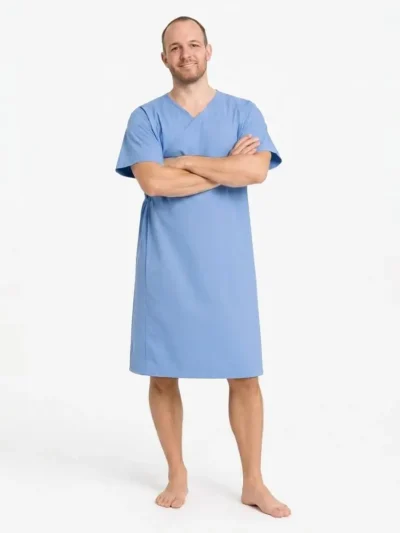
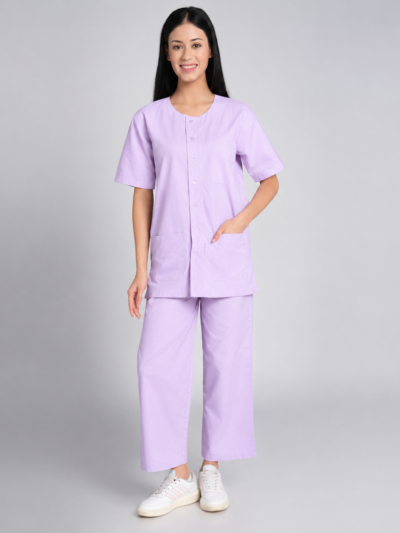
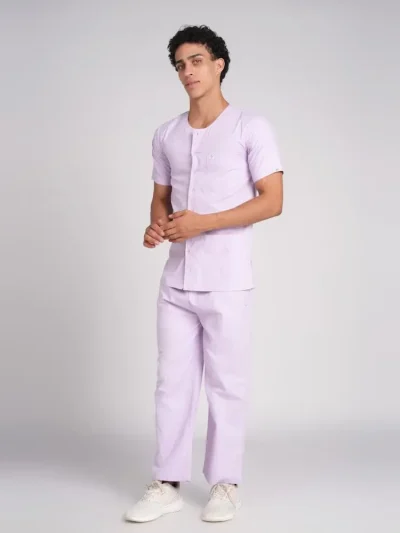
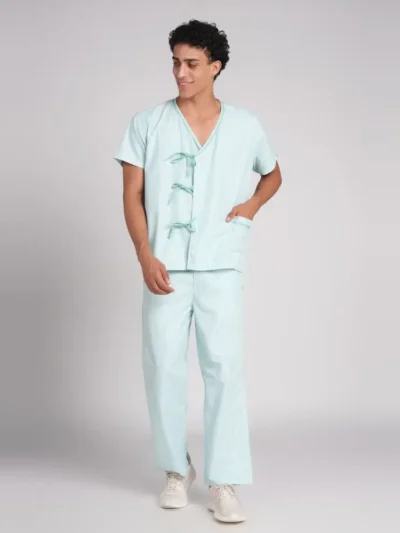
Patient Gowns and Hospital Uniforms
Patient clothing, nursing uniforms and other healthcare garments also need to be fully dried before storage.
For uniforms, hospitals should additionally evaluate:
- Comfort
- Breathability
- Colourfastness
- Fit
- Durability
- Ease of ironing
- Repeated washing performance
Monsoon Hospital Linen Storage Checklist
Once linen is clean and dry, storage becomes the next priority.
Clean Linen Storage Checklist
- ✅ Store only completely dry linen
- ✅ Keep clean and soiled linen physically separated
- ✅ Protect clean linen from dust and soil
- ✅ Avoid overcrowding shelves
- ✅ Maintain appropriate ventilation
- ✅ Monitor humidity where necessary
- ✅ Keep storage areas clean and dry
- ✅ Inspect for dampness or musty odour
- ✅ Use suitable covered carts/containers for transportation
- ✅ Follow hospital laundry and infection-control SOPs
CDC guidance recommends that clean textiles be packaged, transported and stored in ways that protect them from dust and soil.
What If Hospital Linen Gets Wet During Monsoon?
Sometimes moisture exposure is unavoidable.
For example:
- A roof leak affects a linen store.
- Clean linen gets wet during transportation.
- A laundry area experiences water leakage.
- Packed linen becomes damp.
- A batch is removed from the dryer before complete drying.
In such situations, don’t simply return the affected linen to clean storage.
Separate the affected textiles and follow the hospital’s approved reprocessing procedure.
The EPA recommends addressing moisture quickly and drying wet materials promptly because prolonged moisture increases mold risk. For healthcare linen specifically, the appropriate response should follow the facility’s laundry and infection-control procedures.
Common Hospital Linen Mistakes During Monsoon
Mistake 1: Choosing Fabric Only on Price
A low purchase price doesn’t necessarily mean a low total cost. Consider durability, drying requirements, replacement frequency and laundry performance.
Mistake 2: Storing Linen Before It Is Completely Dry
This is one of the biggest avoidable moisture-management problems.
Mistake 3: Ignoring the Laundry Department During Procurement
The purchasing team may select a fabric without consulting the people who actually wash and dry it. Procurement + Nursing + Laundry + Infection Control should ideally be aligned.
Mistake 4: Over Packing the Linen Store
A crowded store can make inspection, ventilation and stock rotation more difficult.
Mistake 5: Assuming Every Synthetic Fabric Is Automatically Better
Fiber type alone doesn’t determine performance.
Fabric construction, GSM, finishing, laundering and drying conditions all matter.
A Practical Monsoon Linen Procurement Strategy
For hospitals, a good monsoon strategy can be divided into four stages.
Stage 1: Audit
Review:
- Current linen types
- Fabric specifications
- Laundry capacity
- Dryer capacity
- Average drying time
- Storage conditions
- Monsoon-related complaints
Stage 2: Test
Take samples from potential suppliers.
Wash and dry them using the hospital’s actual laundry process.
Record:
- Drying time
- Shrinkage
- Colour change
- Fabric feel
- Stitching condition
- Appearance after washing
Stage 3: Standardize
Create an approved specification for each product.
For example: Hospital Bedsheet → Fabric → GSM → Size → Colour → Stitching → Wash Standard → Packaging
Stage 4: Stock Planning
Monsoon can create unpredictable laundry turnaround times, so hospitals should review whether their linen inventory provides sufficient operational flexibility.
Why Choosing the Right Hospital Linen Supplier Matters
A reliable hospital linen supplier should do more than provide a catalogue.
For institutional procurement, hospitals should look for a supplier capable of:
- Consistent fabric quality
- Repeat production
- Bulk manufacturing
- Multiple product categories
- Size and colour consistency
- Custom specifications
- Quality inspection
- Timely delivery
- Appropriate packaging
For hospitals, clinics, diagnostic centers, research facilities and educational institutions, a standardized supplier can simplify recurring hospital linen procurement.
HLI Hospitality Pvt. Ltd. – Hospital Linen for Healthcare Institutions
HLI Hospitality Pvt. Ltd. manufactures and supplies a broad range of hospital linen and healthcare products for institutional environments.
The range can support requirements such as:
- Hospital bedsheets
- Pillow covers
- Hospital towels
- Patient uniforms
- Nursing uniforms
- Scrub suits
- Doctor coats
- OT linen
- Surgical garments
- Blankets
- Other healthcare textiles
For monsoon procurement, hospitals can discuss their specific fabric, GSM, size, colour, laundry and bulk-order requirements with the supplier before finalizing specifications.