
Operating theatre (OT) linen is one of those hospital purchases that never makes headlines — until it fails. A gown that lets fluid strike through, a drape that tears mid-procedure, or bedding that doesn’t hold up to repeated autoclaving can compromise sterility and put patients at risk. Choosing the right OT linen isn’t just a procurement decision; it’s a clinical safety decision.
This guide breaks down the three things every hospital administrator, infection control officer, or procurement manager should evaluate before placing a bulk order of OT linen: GSM (fabric weight), fabric type, and compliance standards.
What Is OT Linen, Exactly?
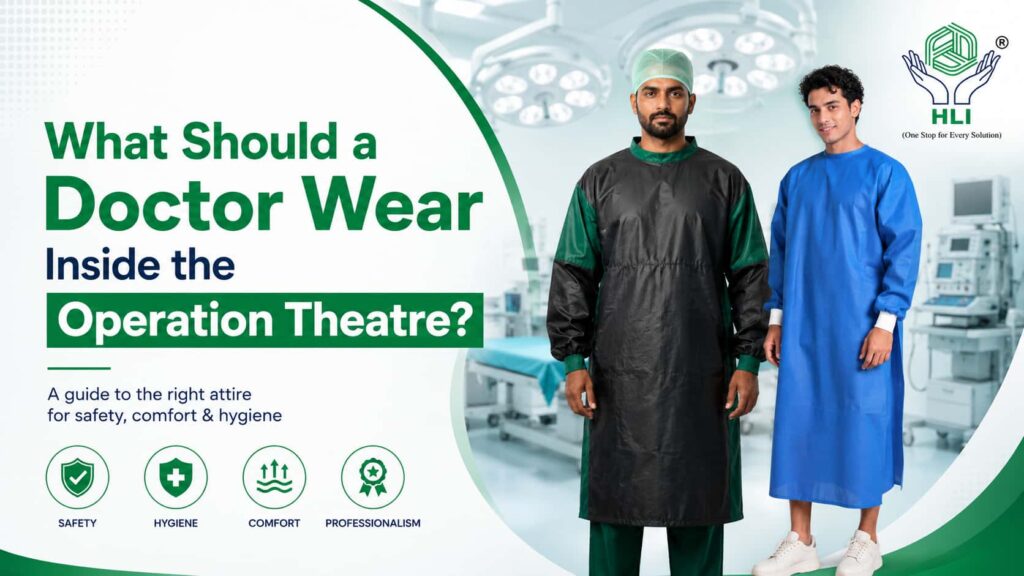
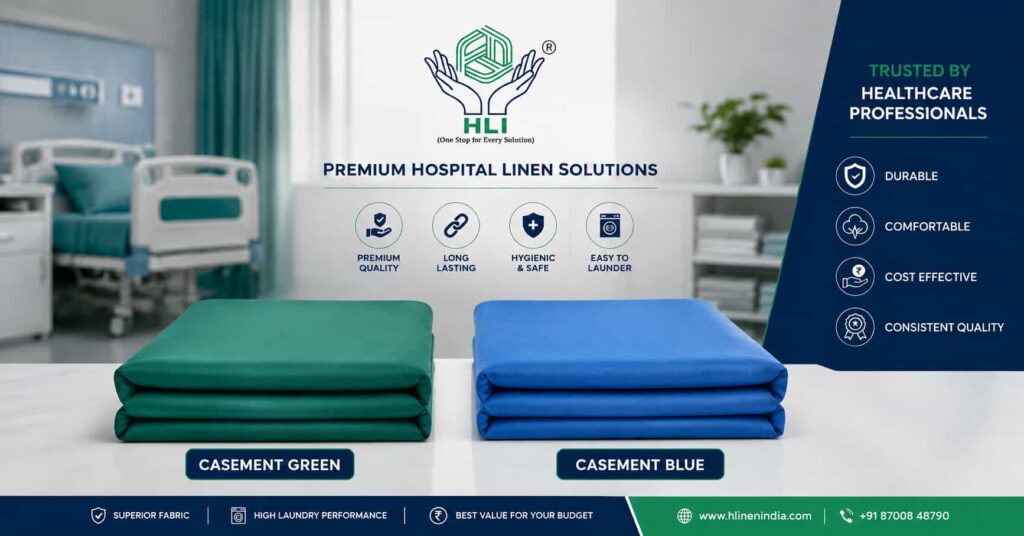
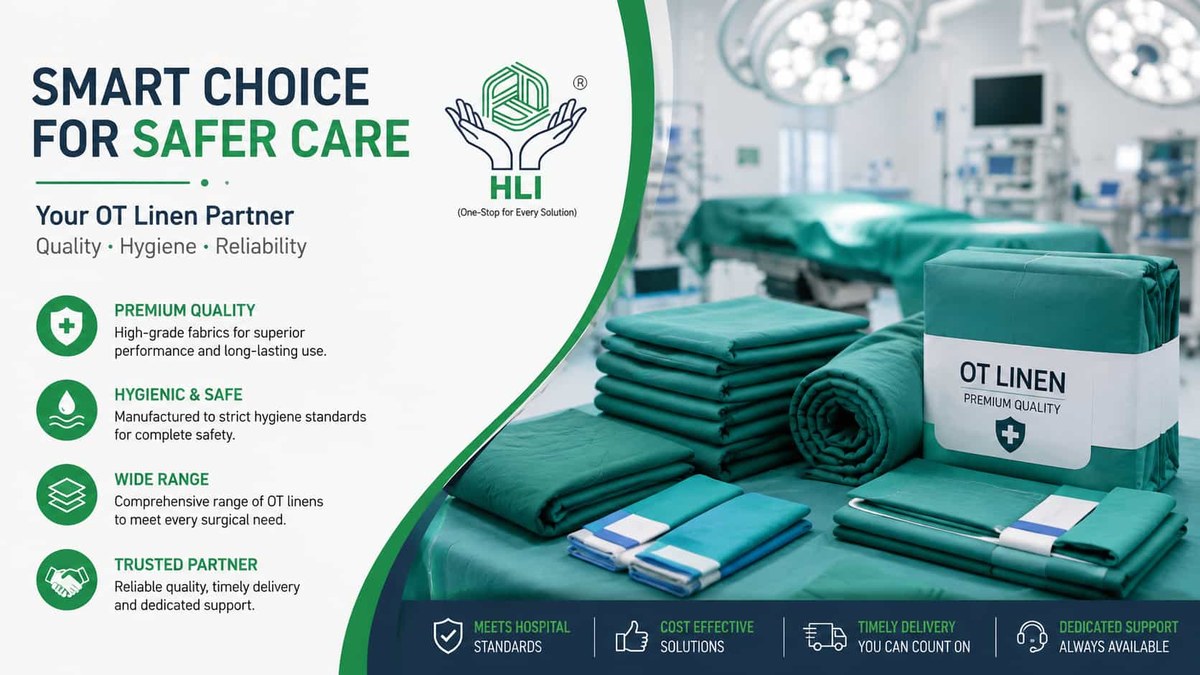
OT linen refers to the complete range of textile products used inside an operating theatre — surgical gowns, OT drapes, bed sheets, pillow covers, patient wraps, surgeon caps, and equipment covers. Unlike regular hospital linen used in general wards, OT linen has to meet much stricter barrier, sterility, and durability standards because it’s used in a controlled, infection-sensitive environment.
Whether you’re sourcing reusable OT linen or disposable OT linen, the fabric composition and construction directly affect how well it protects both the patient and the surgical team.
Understanding GSM in OT Linen
GSM stands for Grams per Square Meter — a measure of fabric density and weight. It’s one of the first specifications you should check when comparing OT linen suppliers, because GSM has a direct impact on strength, opacity, absorbency, and barrier performance.
Why GSM Matters for Operating Theatre Linen
- Higher GSM = higher strength and durability. OT drapes and gowns undergo constant handling, so a low-GSM fabric wears out or tears faster.
- GSM affects fluid resistance. Denser fabric generally resists fluid strike-through better, which is critical during procedures involving blood or other bodily fluids.
- GSM impacts comfort and breathability. Very high GSM fabric can feel heavy and reduce airflow, which matters for long surgeries where the surgical team wears gowns for hours.
- GSM determines sterilization life. Reusable OT linen with the right GSM can typically withstand more wash-and-autoclave cycles before it needs replacement.
Recommended GSM Ranges for Common OT Linen Items
| OT Linen Item | Typical GSM Range |
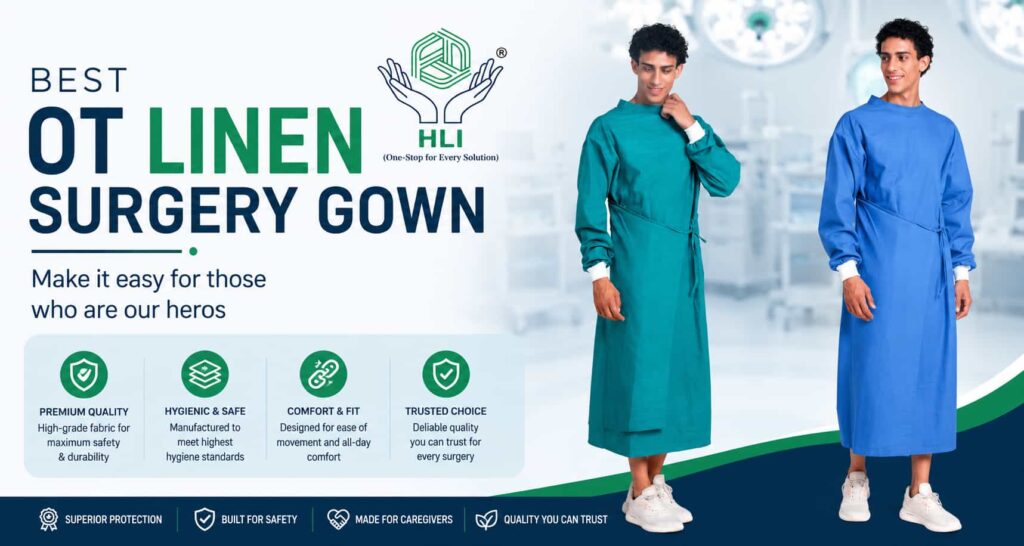
| Surgical gowns (reusable) | 120–170 GSM |
| Surgical gowns (disposable, SMS/SMMS) | 35–60 GSM |
| OT drapes (reusable) | 140–200 GSM |
| OT bed sheets | 130–180 GSM |
| Surgeon caps and covers | 40–60 GSM |
These ranges vary by manufacturer and intended use, so always ask your OT linen supplier for GSM specifications in writing, not just a verbal assurance.
Fabric Types Used in OT Linen
The GSM number only tells you the weight — the fabric type tells you the performance. Here are the most common fabrics used in OT linen manufacturing today.
1. Cotton and Cotton-Rich Blends
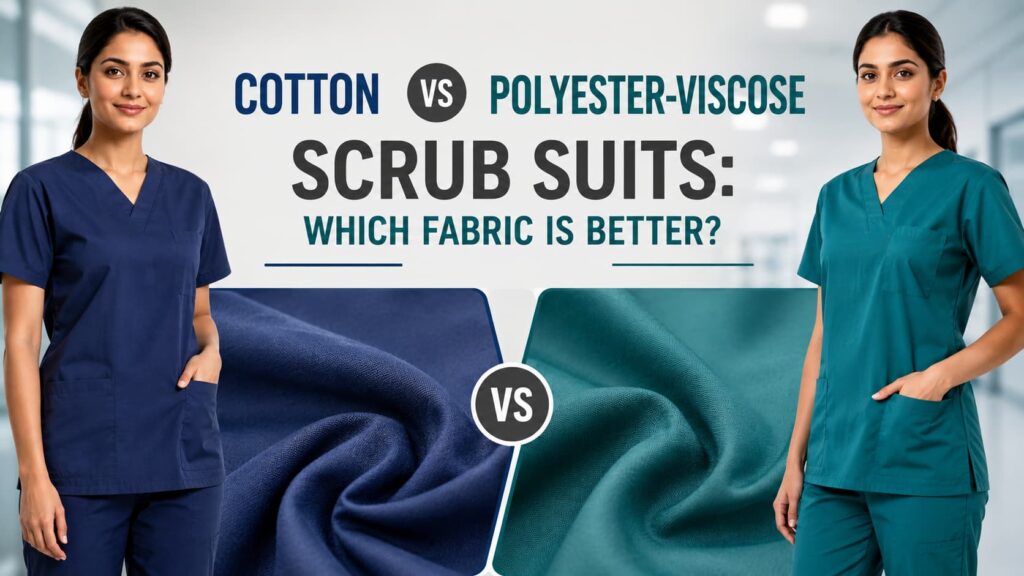
Traditional OT linen is often 100% cotton or a cotton-polyester blend. Cotton is breathable and comfortable but absorbs fluid quickly, which can be a drawback in high-fluid procedures unless treated with a fluid-repellent finish.
2. Polyester-Cotton (PC) Blends
A PC blend combines cotton’s comfort with polyester’s strength and quicker drying time. Many reusable OT gowns and drapes use a 35% cotton / 65% polyester or similar ratio to balance durability with breathability.
3. Non-Woven Fabric (SMS/SMMS)
Used mainly in disposable OT linen, spunbond-meltblown-spunbond (SMS) or spunbond-meltblown-meltblown-spunbond (SMMS) fabric offers excellent fluid barrier properties at a lower GSM. This is the standard fabric for single-use surgical gowns and drapes.
4. Microfiber and Tightly Woven Reusable Fabric
Advanced reusable OT linen now uses tightly woven microfiber fabrics that combine a high thread density with a lower GSM, offering strong fluid resistance without the bulk of older heavy-cotton designs. These are popular where hospitals want reusable linen with disposable-level barrier performance.
Reusable vs. Disposable OT Linen
| Factor | Reusable OT Linen | Disposable OT Linen |
| Upfront cost | Higher | Lower |
| Long-term cost | Lower (over 50–75 wash cycles) | Recurring |
| Environmental impact | Lower waste generation | Higher waste generation |
| Barrier consistency | Depends on wash/sterilization quality | Consistent per unit |
| Storage needs | Requires laundry infrastructure | Requires disposal management |
Most hospitals now use a hybrid model — reusable OT linen for general procedures and disposable linen for high-risk or infection-prone surgeries.
Compliance Requirements for OT Linen
This is the part buyers most often overlook, and it’s the most important. OT linen isn’t a generic textile purchase — it’s a medical-use product, and it should be backed by recognized standards and certifications.
Key Standards to Check Before Buying
- EN 13795 (Europe): The benchmark standard for surgical drapes, gowns, and clean air suits, covering microbial barrier, cleanliness, and mechanical strength requirements.
- AAMI PB70 (US): Classifies surgical gowns and drapes into levels (1–4) based on liquid barrier performance, with Level 3 and 4 required for high-fluid-exposure procedures.
- ISO 13485: Confirms the manufacturer follows a certified quality management system specific to medical devices, which OT linen often falls under.
- NABH and NABL guidelines (India): Hospitals seeking or maintaining NABH accreditation should ensure OT linen procurement aligns with the infection control and material safety benchmarks laid out in NABH standards.
- Fire retardant and biocompatibility certification: OT linen, especially drapes near electro cautery equipment, should carry fire-retardant certification and be tested for skin biocompatibility.
A Simple Compliance Checklist for Procurement Teams
- Does the supplier provide GSM specifications for every product line?
- Is there documented barrier-performance testing (AAMI level or EN 13795 classification)?
- Are fabric composition details (cotton %, polyester %, non-woven type) disclosed?
- Does the manufacturer hold ISO 13485 or equivalent quality certification?
- Is fire-retardant testing available for drapes used near surgical equipment?
- Can the supplier share batch-wise quality reports and wash/sterilization cycle data for reusable linen?
- Does the product meet your hospital’s accreditation body requirements (NABH, JCI, etc.)?
If a supplier can’t answer these questions with documentation, that’s a red flag, regardless of price.
Practical Tips When Buying OT Linen in Bulk
- Request physical samples before bulk ordering. GSM and fabric feel can vary batch to batch; a sample lets your infection control team physically verify quality.
- Match GSM to procedure type, not just cost. Lower-GSM linen might be fine for short, low-fluid procedures but risky for long or high-exposure surgeries.
- Factor in laundry capability for reusable linen. Reusable OT linen is only as good as your sterilization and laundry process — verify your facility can maintain the recommended wash cycles.
- Ask about shrinkage and colorfastness. Repeated autoclaving and washing should not significantly alter GSM, size, or barrier performance over the product’s stated lifecycle.
- Compare cost per use, not cost per unit. A reusable gown that costs more upfront but survives 75 wash cycles is often cheaper per use than a disposable alternative.