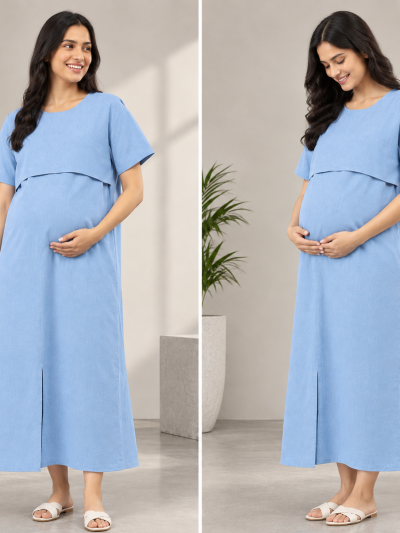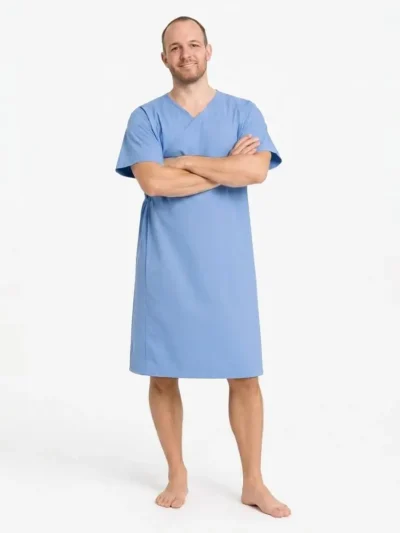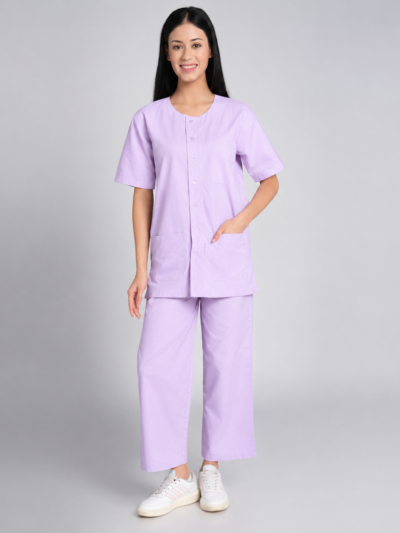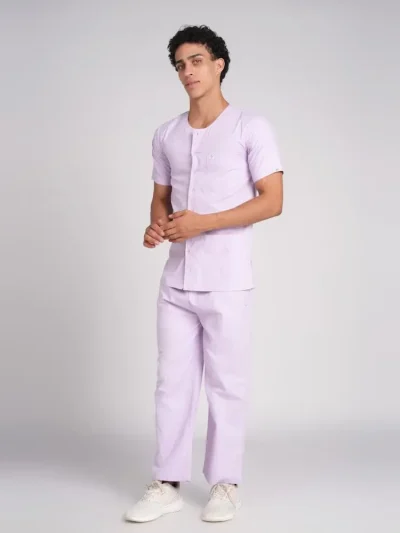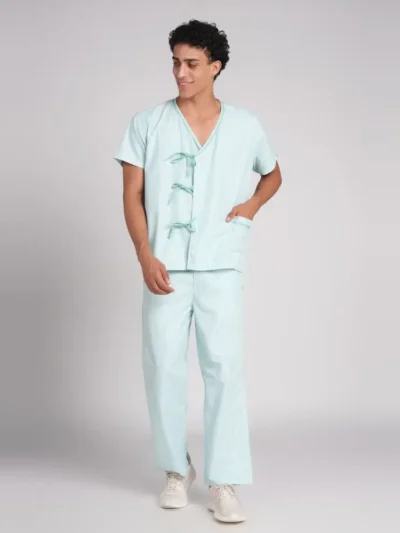

For every hospital, linen is a daily operational necessity. Healthcare providers continuously use bed sheets, pillow covers, patient gowns, towels, blankets, OT linen, surgical gowns, scrub suits, and other healthcare textiles, and they need to ensure these items are available in the right quantity and condition.
Managing hospital linen involves more than just buying fabric. Hospitals also have to consider laundry costs, replacement, storage, manpower, transportation, quality control and inventory management.
This leads to an important procurement question:
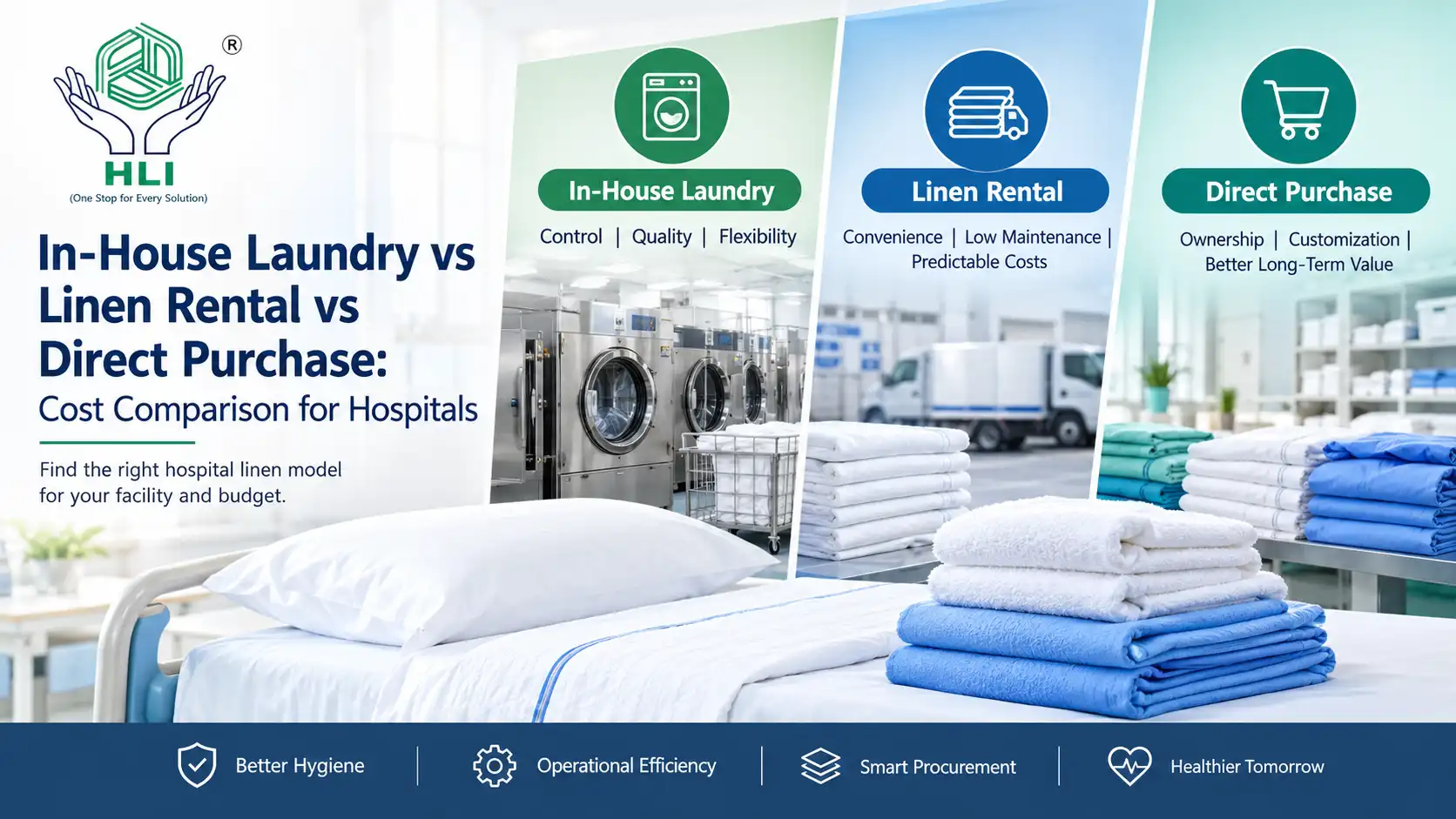
Should a hospital manage laundry in-house, rent linen from a service provider, or purchase hospital linen directly and arrange laundering separately?
There is no single answer for every hospital. The most cost-effective model depends on bed capacity, linen consumption, laundry infrastructure, manpower, washing requirements and procurement volumes.
Let’s compare all three options.
1. In-House Hospital Laundry
With an in-house laundry model, the hospital owns the linen and manages the complete laundering process internally.
The hospital is responsible for:
- Purchasing hospital linen
- Washing and drying
- Sorting and folding
- Laundry equipment
- Water and electricity
- Detergents and chemicals
- Laundry staff
- Repairs and maintenance
- Linen storage
- Replacement of damaged or worn-out linen
Healthcare laundry requires controlled handling because used textiles can carry blood, body fluids and microorganisms. CDC guidance recommends appropriate containment, minimal agitation of contaminated textiles, separation of clean and soiled areas, and proper handling and processing procedures.
Advantages of in-house laundry
The biggest advantage is control.
Hospitals can control:
- Washing schedules
- Linen quality
- Stock availability
- Laundry procedures
- Replacement cycles
- Internal distribution
For a large hospital with sufficient linen volume and an already established laundry facility, this model can be financially attractive.
A cost analysis conducted at a tertiary-care teaching hospital in South India reported linen procurement, processing and maintenance costs of approximately ₹25 per kg in that particular hospital, excluding space, electricity, water and chemical costs. The study concluded that outsourcing was not necessary for that facility. This illustrates why hospitals should calculate their own total cost rather than assuming that outsourcing is automatically cheaper.
Disadvantages
The initial investment can be significant.
Hospitals may need:
- Commercial washing machines
- Hydro extractors
- Dryers
- Ironing/pressing equipment
- Laundry space
- Water supply and drainage
- Trained employees
- Maintenance support
There are also ongoing operational expenses.
Therefore, in-house laundry may work particularly well for hospitals with high linen volumes and suitable infrastructure, but it requires strong management.
2. Linen Rental for Hospitals
In a linen rental model, the hospital generally pays a service provider for the use and processing of linen.
Depending on the contract, the service provider may supply, collect, launder, maintain and replace the linen.
This can reduce the hospital’s need to invest in laundry infrastructure.
CDC guidance recognizes both off-site commercial laundry models where healthcare facilities own their textiles and rental models where the processor owns the textiles and charges a rental fee.
Advantages of linen rental
The biggest advantage is reduced operational responsibility.
Hospitals may avoid:
- Purchasing large laundry equipment
- Managing laundry employees
- Managing water and chemical consumption
- Maintaining laundry machinery
- Handling some linen replacement responsibilities
It can also make budgeting easier because the hospital may have a predictable service cost.
For hospitals that do not have enough space for a laundry facility or do not want to manage laundry operations, linen rental can be convenient.
Disadvantages
The convenience comes at a price.
Rental contracts can include charges based on:
- Number of pieces
- Weight
- Usage
- Collection and delivery
- Replacement
- Service frequency
- Special linen requirements
The hospital may also have less control over fabric selection, customization and inventory than it would have when purchasing linen directly.
Before choosing rental, hospitals should carefully review the agreement and understand exactly what is included in the service price.
3. Direct Purchase of Hospital Linen
Direct purchase means the hospital purchases its own linen from a hospital linen manufacturer or supplier and manages laundering either internally or through a separate laundry service.
For many hospitals, this can provide a useful balance between ownership and operational flexibility.
The hospital can purchase products such as:
- Hospital bed sheets
- Pillow covers
- Patient gowns
- Patient dresses
- Towels
- Blankets
- OT sheets
- OT wrappers
- Surgical gowns
- Scrub suits
- Doctor coats
- Nursing uniforms
- Curtains and other healthcare textiles
Advantages of direct purchase
The hospital owns the products.
This gives the procurement team greater control over:
Fabric selection:
Hospitals can select fabric based on durability, comfort, absorbency and intended use.
Colour and specifications:
Different departments can have different linen requirements.
Customization:
Hospitals may request specific sizes, designs, colours, embroidery or branding depending on the supplier.
Inventory:
The hospital can determine how much linen it needs based on occupancy and replacement cycles.
Supplier selection:
Hospitals can compare manufacturers on quality, pricing, delivery capacity and customization.
For large-volume requirements, working directly with a manufacturer can also simplify bulk procurement.
Cost Comparison: Which Model Is Cheaper?
The cheapest option is not necessarily the one with the lowest initial price.
Hospitals should calculate the total cost of ownership.
| Cost Factor | In-House Laundry | Linen Rental | Direct Purchase |
| Linen purchase | Yes | Usually included in service | Yes |
| Laundry equipment | High investment | No/low | Depends on laundry model |
| Laundry manpower | Required | Usually outsourced | Depends on laundry model |
| Water & electricity | Hospital pays | Usually included | Depends on laundry model |
| Chemicals | Hospital pays | Usually included | Depends on laundry model |
| Linen replacement | Hospital responsibility | Contract dependent | Hospital responsibility |
| Fabric customization | High control | Contract dependent | High control |
| Inventory control | High | Medium | High |
| Initial investment | High | Low | Moderate |
| Operational control | Very high | Lower | High |
The important point is that direct purchase and in-house laundry are not necessarily competing models.
A hospital can purchase linen directly from a manufacturer and outsource only the washing and processing.
This hybrid approach can provide ownership and product control without requiring the hospital to build a complete laundry operation.
What Should Hospitals Include in Their Linen Cost Calculation?
A proper hospital linen cost calculation should include more than the purchase price.
Consider these factors:
1. Purchase Cost
Calculate the cost per piece for sheets, pillow covers, gowns, towels, OT linen and other products.
2. Expected Useful Life
A cheaper product that wears out quickly may cost more over its lifetime than a durable product with a higher purchase price.
3. Laundry Cost
Include:
- Water
- Electricity
- Detergent
- Chemicals
- Labour
- Drying
- Pressing
- Equipment maintenance
4. Replacement Cost
Hospitals should track how frequently linen is lost, damaged, stained or discarded.
5. Inventory Cost
Maintaining insufficient linen can cause shortages. Maintaining excessive stock ties up capital and storage space.
6. Transportation
For outsourced laundry or rental models, collection and delivery charges should be included in the calculation.
7. Storage
Clean linen needs appropriate storage and handling to protect it from contamination, dust and damage. CDC guidance recommends protecting clean textiles during storage and transport and keeping them separated from soiled textiles.
Why Linen Quality Matters More Than the Purchase Price
Hospital linen experiences repeated washing, drying, folding and handling.
Therefore, procurement teams should look beyond the initial price.
Important factors include:
- Fabric construction
- GSM
- Stitching quality
- Colour fastness
- Shrinkage
- Absorbency
- Durability
- Comfort
- Wash resistance
- Size consistency
For example, a hospital bed sheet that costs slightly more but maintains its shape and strength through repeated laundering may offer better long-term value than a cheaper sheet requiring frequent replacement.
This is why hospitals should evaluate cost per use, not simply cost per piece.
Direct Purchase Can Make Sense for Growing Hospitals
For hospitals expanding their facilities or increasing bed capacity, direct hospital linen procurement can provide greater flexibility.
Instead of committing to a long-term rental arrangement, the hospital can purchase linen according to its actual requirements.
A hospital may gradually build its inventory of:
Ward Linen → Patient Linen → OT Linen → Towels → Blankets → Staff Uniforms
This approach also allows procurement teams to standardize products across departments.
For example, a hospital can establish specifications for:
- Bed sheet size
- Pillow cover size
- Patient gown design
- OT linen colour
- Towel GSM
- Blanket weight
- Fabric composition
Once specifications are standardized, future purchases become easier to compare.
In-House Laundry vs Rental vs Direct Purchase: Quick Decision Guide
Choose In-House Laundry If:
- You have a large and consistent linen volume.
- You already have laundry infrastructure.
- You have trained laundry staff.
- You want maximum operational control.
- You can manage laundry quality and infection-control procedures.
Choose Linen Rental If:
- You want minimal laundry management.
- You have limited space for laundry infrastructure.
- You prefer a service-based model.
- You want to reduce upfront equipment investment.
Choose Direct Purchase If:
- You want ownership of your hospital linen.
- You need customized sizes or specifications.
- You want control over fabric quality.
- You want to compare manufacturers and negotiate bulk pricing.
- You already have an in-house or outsourced laundry arrangement.
Consider a Hybrid Model If:
You want the benefits of direct ownership but do not want to operate a complete laundry facility.
In this model, the hospital purchases hospital linen directly from a manufacturer and outsources the laundry processing.
For many healthcare facilities, this can be a practical middle ground.
How HLI Hospitality Can Support Hospital Linen Procurement
For hospitals, clinics, diagnostic centres, research facilities and other healthcare institutions, choosing the right hospital linen supplier is an important part of procurement planning.
HLI Hospitality Pvt. Ltd. focuses on manufacturing and supplying products for institutional and healthcare requirements, making product specifications, quality and bulk procurement important considerations when planning a hospital linen program.
When evaluating a hospital linen manufacturer, procurement teams should compare:
- Product specifications
- Fabric composition
- GSM
- Available sizes
- Colour options
- Customization
- Bulk order capability
- Quality consistency
- Delivery timelines
- After-sales support
The right supplier should be able to understand the hospital’s application rather than simply offering the lowest price.
Final Verdict: Which Is the Best Hospital Linen Model?
There is no universal winner between in-house laundry, linen rental and direct hospital linen purchase.
The right choice depends on the hospital’s size, linen consumption, infrastructure, workforce and procurement strategy.
In-house laundry offers maximum control but requires infrastructure and management.
Linen rental reduces operational responsibility but can create ongoing service costs and contractual dependencies.
Direct purchase provides ownership, customization and procurement control, particularly when the hospital works with a reliable hospital linen manufacturer.
For many hospitals, a direct-purchase plus outsourced-laundry model can be worth considering because it separates linen procurement from laundry operations.
Ultimately, the smartest decision is to calculate the total cost per use, not just the purchase price or monthly service fee. A well-planned hospital linen management system can reduce unnecessary replacement, improve inventory control, support hygiene practices and help hospitals make better use of their procurement budget.