

Introduction
Bath towels are an essential part of everyday comfort in hospitals, hotels, resorts, and healthcare facilities. While guests expect soft, comfortable towels in hotels, hospitals need bath linen that supports hygiene, frequent washing, and long-term use. In both industries, choosing the right towel is about more than appearance. It requires the right balance of absorbency, durability, softness, and easy maintenance.
For hotels, quality bath towels help create a positive guest experience. For hospitals, they support daily patient care and personal hygiene. However, towels that lose their softness, become rough after repeated washing, or take too long to dry can increase operating costs and affect user satisfaction.
This hospital and hotel bath linen guide explains how to choose the right towels, which materials to consider, how GSM affects performance, and how proper care can extend towel life.
Whether you manage a hotel, hospital, resort, nursing home, or laundry facility, understanding these factors will help you make better purchasing decisions.
1. What Is Bath Linen and Why Does It Matter?
Bath linen refers to textile products used for bathing, drying, and personal hygiene. It is an important part of hospitality and healthcare linen management.
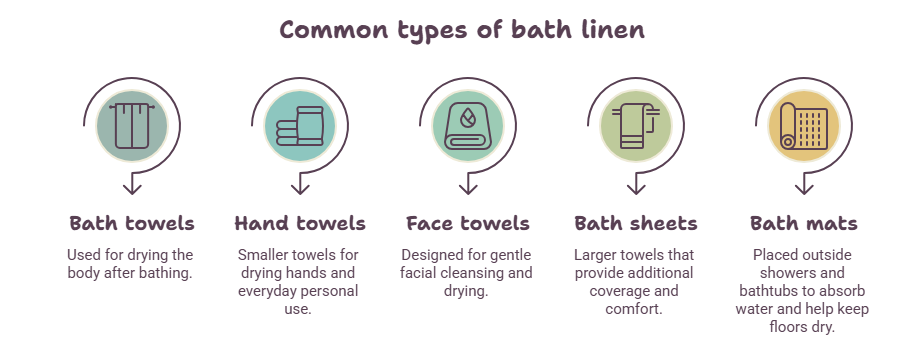
Common types of bath linen include:
- Bath towels: Used for drying the body after bathing.
- Hand towels: Smaller towels for drying hands and everyday personal use.
- Face towels: Designed for gentle facial cleansing and drying.
- Bath sheets: Larger towels that provide additional coverage and comfort.
- Bath mats: Placed outside showers and bathtubs to absorb water and help keep floors dry.
In hotels, bath linen contributes to guest comfort, cleanliness, and the overall impression of the property. Fresh, soft, well-maintained towels can make a room feel more welcoming.
In hospitals, bath towels are used for patient bathing, personal hygiene, and routine care. They must withstand frequent laundering and be suitable for the facility’s infection prevention and linen-handling procedures.
Choosing appropriate hospital and hotel bath linen helps businesses maintain consistent quality while managing replacement costs and laundry operations.
2. What Makes a Good Bath Towel?
Not every towel performs equally well. A towel may feel soft in a showroom but lose its texture after repeated washing. Another may be highly absorbent but take too long to dry, increasing laundry turnaround time.
The best bath towels balance several important qualities.
High Absorbency
Absorbency is the ability of a towel to take up moisture quickly and effectively. Cotton towels are popular because their fibres can absorb water and provide a comfortable drying experience.
For hospitals and hotels, good absorbency helps towels perform their primary function efficiently. However, absorbency also depends on yarn quality, fabric construction, finishing treatments, and washing practices.
Long-Lasting Durability
Commercial towels are washed much more frequently than towels used at home. They may experience repeated exposure to detergents, mechanical action, and high-temperature laundering where required by the facility’s procedures.
Durable towels are less likely to develop holes, frayed edges, excessive linting, or weakened seams.
Softness and Comfort
Softness matters particularly in hotels, where guests associate comfortable towels with quality service. In hospitals, soft towels can improve the bathing experience for patients, including older adults and people who require assistance.
However, excessive fabric softener can reduce absorbency by leaving a coating on the fibres. Proper laundering is essential to maintain both softness and performance.
Quick Drying
Towels that dry efficiently can help reduce laundry bottlenecks, especially in facilities with high daily linen consumption.
A towel’s drying time depends on its thickness, fibre composition, moisture retention, ventilation, and drying equipment.
Easy Maintenance
Commercial bath linen should be practical to wash, dry, inspect, fold, and store. Towels that maintain their shape and appearance after repeated laundering can make linen management easier.
3. Which Fabric Is Best for Hospital and Hotel Towels?
Fabric selection is one of the most important decisions when purchasing bath linen. The right choice depends on the intended use, laundry capacity, budget, and expected service life.
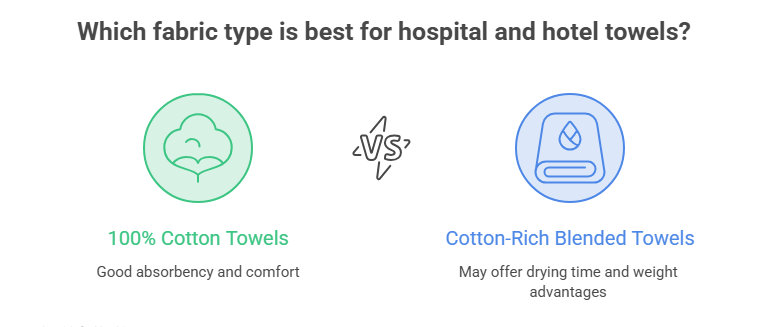
100% Cotton Towels
Cotton is one of the most widely used materials for bath towels because of its absorbency and comfortable feel.
Advantages:
- Good moisture absorption.
- Comfortable texture for everyday use.
- Suitable for a wide range of towel sizes and weights.
- Available in different qualities and constructions.
Best suited for: Hotel bathrooms, guest rooms, hospital bathing, and general-purpose bath linen.
Cotton quality varies according to fibre characteristics, yarn construction, and manufacturing methods. Therefore, buyers should evaluate the finished towel rather than relying on the fibre label alone.
Cotton-Rich Blended Towels
Some towels use cotton blended with synthetic fibres. Depending on the blend and construction, these products may offer advantages in drying time, weight, or dimensional stability.
However, synthetic content can affect absorbency and the overall feel of the towel. Performance varies considerably between products.
Best suited for: Facilities seeking a particular combination of weight, maintenance requirements, and operating cost, provided the towel meets their absorbency needs.
Combed Cotton Towels
Combed cotton is produced through an additional fibre-processing step that removes many shorter fibres and impurities before spinning.
Depending on the yarn and construction, combed cotton towels can offer a smoother feel and good fabric consistency.
Best suited for: Hotels, premium hospitality properties, and facilities that prioritise a comfortable towel texture.
Buying tip: Ask suppliers about fabric composition, construction, expected laundering performance, and sample availability before placing a bulk order.
4. Understanding GSM: How Thick Should a Bath Towel Be?
GSM stands for grams per square metre. It measures the weight of a fabric per unit area and is commonly used to describe towel thickness and weight.
A higher GSM generally means a heavier towel, but it does not automatically mean better absorbency or longer life.
Here is a practical guide to towel GSM ranges:
| GSM Range | Typical Characteristics | Suitable Applications |
|---|---|---|
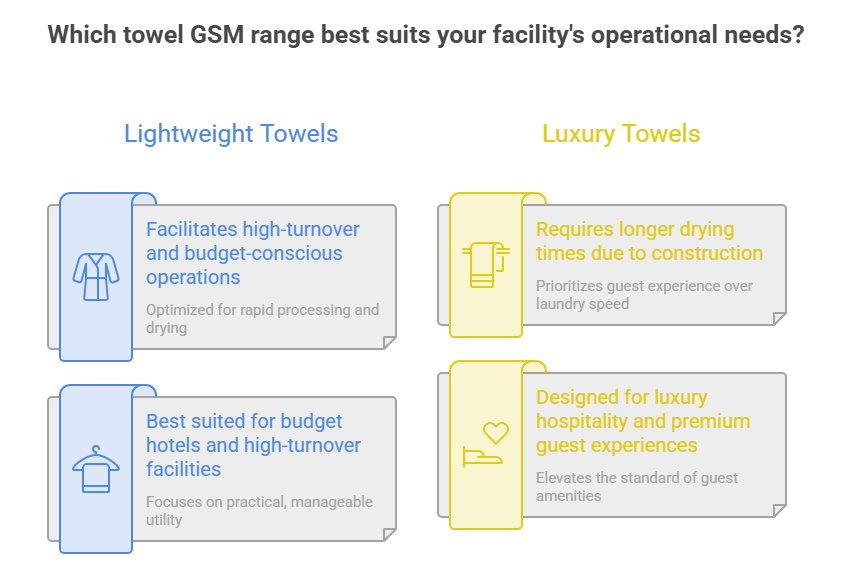
| 300–400 GSM | Lightweight and generally quicker to dry | High-turnover facilities and budget-conscious operations |
| 400–500 GSM | Moderate weight with a balance of comfort and practicality | Everyday hotel and institutional use |
| 500–600 GSM | Heavier feel with good potential for absorbency | Mid-range and premium hotel bathrooms |
| 600–700+ GSM | Plush, heavier construction that may require longer drying | Luxury hospitality and premium guest experiences |
These ranges are general purchasing guidelines, not universal performance standards. Actual results depend on fibre quality, yarn construction, pile structure, finishing, and laundering.
How Should Hotels Choose GSM?
Hotels should consider their brand positioning and laundry capacity. A luxury property may prefer heavier towels for a plush guest experience, while a budget hotel may benefit from lighter towels that are easier to process in large quantities.
How Should Hospitals Choose GSM?
Hospitals should focus on practical absorbency, manageable drying times, durability, and compatibility with their laundry processes. A medium-weight towel may offer a useful balance for routine use, but the final choice should be based on testing and operational requirements.
5. Hospital Bath Linen vs Hotel Bath Linen: What Is the Difference?
Although both industries require clean and dependable towels, their priorities can differ.
Hotel Bath Linen
Hotels often prioritise:
- Softness and guest comfort.
- A neat, premium appearance.
- Consistent colour and size.
- Absorbency after repeated laundering.
- Durability under commercial laundry conditions.
White towels are common in many hotels because they create a clean, coordinated appearance and can simplify visual inspection. However, the appropriate colour and laundering process depend on the property’s operating procedures.
Hospital Bath Linen
Hospitals often prioritise:
- Reliable absorbency for daily patient care.
- Resistance to frequent laundering.
- Strong seams and finished edges.
- Easy inspection for damage and stains.
- Compatibility with approved laundry and infection prevention procedures.
Hospital towels should be processed according to the facility’s established hygiene protocols. Clean towels must also be stored and handled appropriately to prevent recontamination.
Important: No towel fabric alone guarantees infection prevention. Hygiene depends on the complete system, including collection, segregation, washing, drying, storage, transport, and handling.
6. How to Choose Durable Towels for Commercial Use
When buying bath linen in bulk, looking beyond the initial price is essential. A lower-cost towel may need frequent replacement, while a better-made towel may provide more value over its useful life.
Consider the following factors before placing an order.
Check the Stitching and Edges
Inspect the hems, seams, and corners. Weak stitching can lead to fraying and premature damage after repeated washing.
Well-finished edges help towels retain their structure during regular commercial use.
Evaluate Fabric Strength
A towel should maintain its integrity after repeated washing and drying. Ask the supplier about the intended application and test samples under conditions similar to your actual laundry process.
Assess Absorbency
Test how effectively the towel absorbs water. Consider not only its initial performance but also whether absorbency remains satisfactory after repeated laundering.
Check Colour and Dimensional Stability
Towels should retain an acceptable appearance and size throughout their service life. Shrinkage, fading, and uneven colouring can create problems during inventory management.
Consider Supplier Reliability
For hotels and hospitals, consistent supply is as important as product quality. A dependable supplier should provide clear specifications, consistent manufacturing standards, and realistic delivery timelines.
Before ordering, confirm the towel size, GSM, material composition, colour, stitching details, packaging, and quantity.
7. Common Mistakes to Avoid When Buying Bath Towels
Even experienced purchasing teams can make mistakes when selecting commercial bath linen.
Choosing towels based only on price: The cheapest option may have weaker stitching, lower absorbency, or a shorter service life.
Assuming higher GSM always means better quality: A heavy towel may feel luxurious but could take longer to dry and consume more laundry resources.
Ignoring laundry requirements: Towels must be compatible with the facility’s detergents, wash cycles, drying equipment, and hygiene procedures.
Overlooking sample testing: A sample allows buyers to evaluate texture, absorbency, construction, and practical performance before committing to a large order.
Buying inconsistent specifications: Changes in size, weight, or fabric quality between batches can complicate inventory control and create an inconsistent guest or patient experience.
Ignoring replacement planning: Even durable towels eventually wear out. Regular inspections and planned replacement help maintain acceptable linen quality.
8. Best Practices for Maintaining Hospital and Hotel Bath Linen
Proper care can help extend towel life, maintain absorbency, and reduce unnecessary replacements.
Follow Recommended Washing Procedures
Use the correct detergent, water temperature, and wash programme for the fabric and the facility’s hygiene requirements. Hospital laundry must follow applicable infection prevention procedures.
Avoid Excessive Fabric Softener
Too much fabric softener can coat towel fibres and reduce their ability to absorb moisture. Use it only when appropriate for the product and laundry process.
Do Not Overload Washing Machines
Overloading reduces the space available for effective washing and rinsing. Follow the machine manufacturer’s load recommendations.
Dry Towels Properly
Overdrying can damage fibres and increase wear, while insufficient drying can leave moisture in the fabric. Follow suitable drying settings and verify that towels are completely dry before storage.
Inspect Towels Regularly
Remove towels that are excessively worn, torn, persistently stained, or otherwise unsuitable for use. This is especially important in healthcare environments.
Store Clean Towels Correctly
Keep processed towels in a clean, dry, designated storage area. Protect them from moisture, dust, and unnecessary handling.
9. Why Bulk Buyers Should Consider Total Cost of Ownership
For hotels and hospitals, the actual cost of a towel includes more than its purchase price.
A useful purchasing approach is to evaluate the total cost of ownership, including:
- Initial purchase price.
- Expected number of uses and washes.
- Laundry and drying costs.
- Labour and handling requirements.
- Replacement frequency.
- Stock required to maintain daily operations.
For example, a towel with a lower purchase price may not be the most economical option if it loses absorbency or develops damaged seams quickly.
A better comparison considers the cost per usable cycle. If two towel options perform differently, the one that lasts longer and meets the facility’s requirements may provide better long-term value.
Bulk buyers should request product samples, compare specifications, and discuss expected performance with their suppliers before making a large purchase.
10. Choosing the Right Bath Linen Supplier
A reliable bath linen supplier helps businesses maintain consistent quality and avoid unnecessary procurement challenges.
When evaluating suppliers, look for:
- A clear range of towel sizes, materials, and GSM options.
- Consistent product specifications.
- Suitable stitching and finishing quality.
- The ability to fulfil bulk requirements.
- Transparent pricing and delivery timelines.
- Product samples for evaluation.
- Responsive communication and after-sales support.
Hospitals and hotels should also confirm whether the supplier can maintain consistent specifications across repeat orders.
For businesses with multiple locations, standardising towel sizes, colours, and specifications can simplify purchasing, inventory management, and linen replacement.