
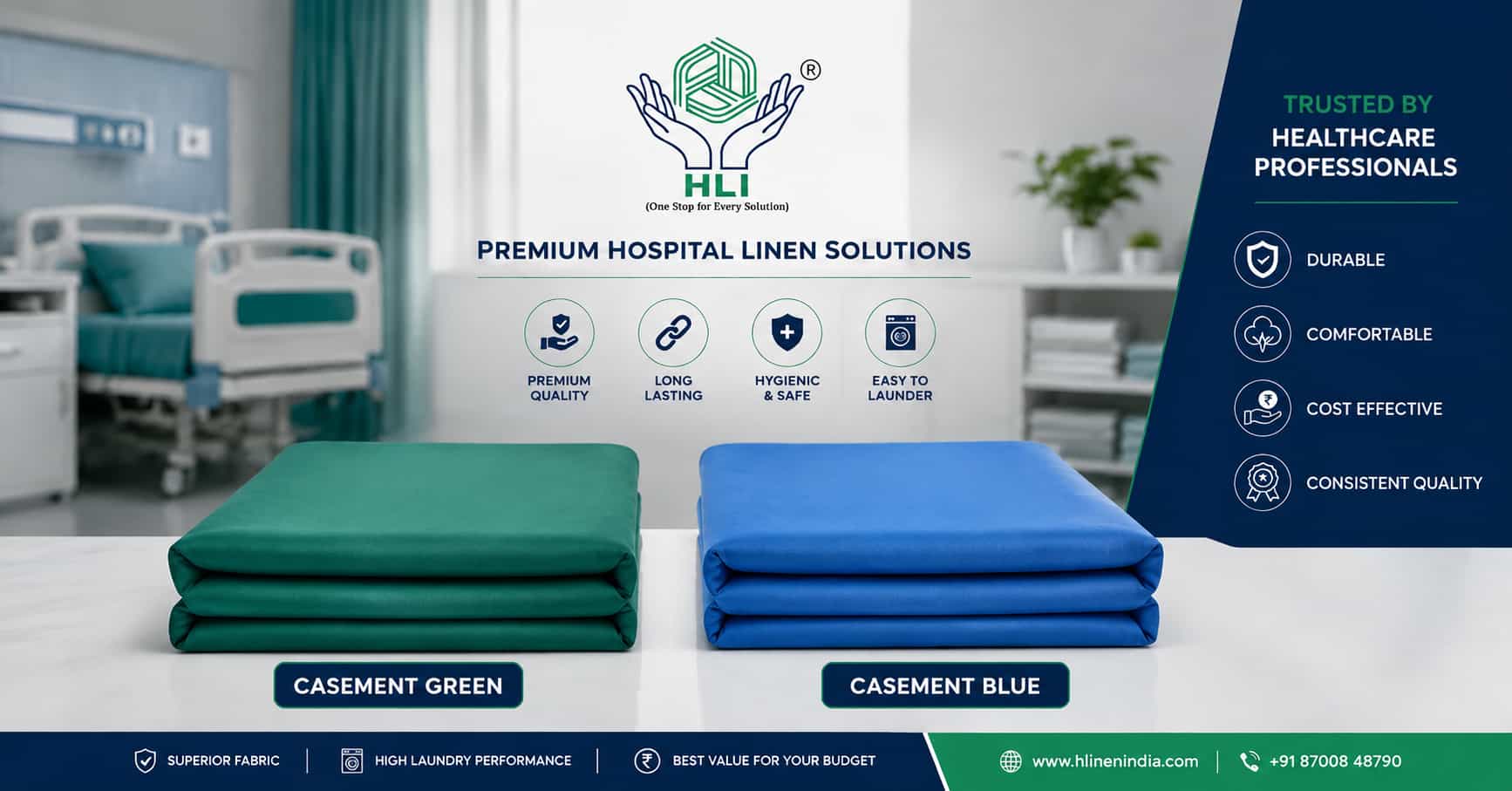
Choosing the right fabric for hospital linen is not just about the purchase price. Hospitals need textiles that can handle frequent washing, provide patient comfort, maintain their appearance, and deliver good value over their entire service life.
Among the most commonly considered options are 100% cotton, poly-cotton, and casement fabric. Each has different advantages, making the right choice dependent on your hospital’s budget, laundry process, patient requirements, and intended use.
100% Cotton Hospital Linen
Cotton is a natural fiber known for its softness, breathability, and moisture absorption. It is particularly suitable for products that remain in prolonged contact with patients, such as bed sheets, draw sheets, towels, and certain patient garments.
Cotton offers excellent comfort but can require more drying time and may experience greater dimensional changes after repeated industrial laundering compared with polyester-containing fabrics.
Best for:
- Patient bed sheets
- Draw sheets
- Towels and bath linen
- Long-stay patient areas
- Comfort-focused healthcare applications
Poly-Cotton Hospital Linen
Poly-cotton combines cotton’s comfort with polyester’s durability. A commonly used institutional blend is around 65% polyester and 35% cotton, although other ratios are also used depending on the application. WHO guidance notes that polyester-cotton blends combine the comfort of cotton with polyester’s durability.
The polyester component can improve dimensional stability and drying performance, making poly-cotton attractive for hospitals with high laundry volumes.
Best for:
- High-turnover ward linen
- Pillow covers
- General bedsheets
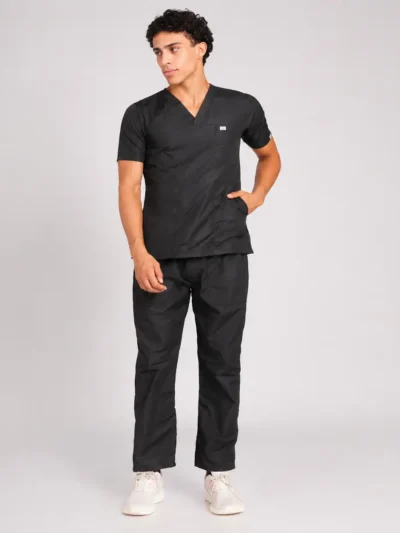
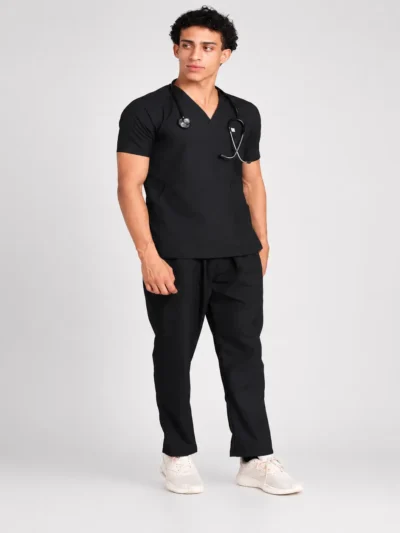
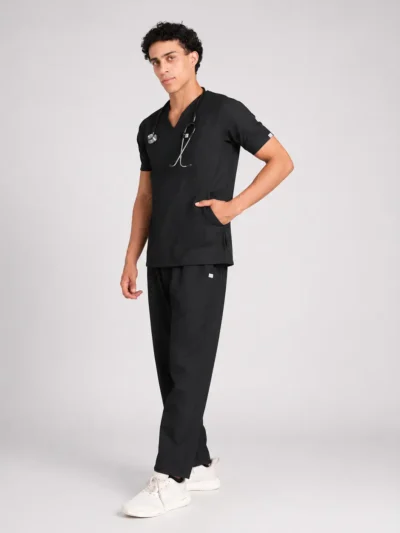
- Patient uniforms
- Staff uniforms
- High-volume laundry operations
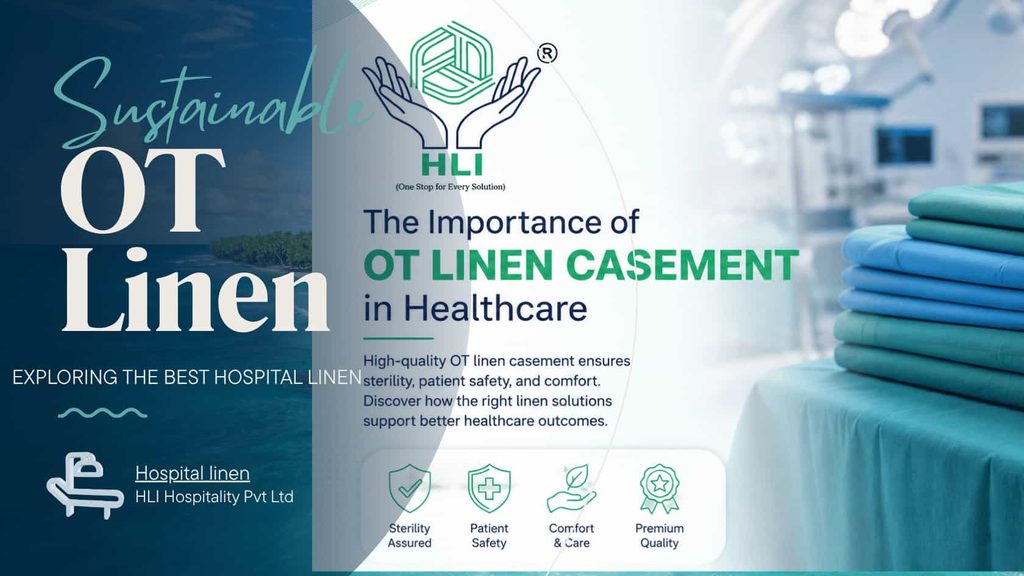
What Is Casement Fabric?
Casement is generally a plain-woven cotton fabric used for hospital bedsheets and institutional linen. Healthcare procurement specifications can define casement by its yarn count, thread density, GSM, composition, strength, dimensional stability, and colour-fastness requirements. For example, one published AIIMS procurement specification describes casement as a cotton bed-sheet fabric with 100% cotton construction and a minimum weight of 180 GSM.
Because specifications can vary, hospitals should compare the actual GSM, yarn count, thread count, construction, and finishing rather than choosing a fabric based only on the name “casement.”
Cotton vs Poly-Cotton vs Casement: Quick Comparison
| Feature | 100% Cotton | Poly-Cotton | Casement |
| Patient comfort | Excellent | Very good | Excellent |
| Breathability | Excellent | Good | Excellent |
| Moisture absorption | High | Moderate | High |
| Drying speed | Slower | Faster | Slower |
| Durability | Good | Very good | Good to very good, depending on specification |
| Shape retention | Moderate | High | Depends on construction/finishing |
| Initial budget | Moderate | Moderate | Moderate to higher depending on specification |
| Best application | Comfort-focused linen | High-volume institutional linen | Heavy-duty cotton bedsheets |
| Laundry efficiency | Moderate | High | Moderate |
Which Fabric Is Best for Your Hospital Budget?
If your hospital’s priority is maximum patient comfort, 100% cotton is a strong choice.
If your priority is lower laundry time, durability, and better cost efficiency over repeated use, poly-cotton can provide a practical balance. Healthcare textile guidance also recognizes polyester’s contribution to strength and useful life in high-use laundry operations.
If your hospital specifically requires heavy-duty cotton bedsheets, casement can be an excellent option when the required GSM, yarn count, thread density, strength, and laundering specifications are properly matched. AIIMS procurement specifications demonstrate how detailed casement requirements can be.
Don’t Compare Only the Purchase Price
A cheaper bedsheet is not necessarily cheaper for the hospital.
Consider:
Total cost = Purchase price + laundry cost + replacement frequency + labour + drying/finishing cost
Polyester-containing fabrics can dry faster and maintain dimensions better, which may be valuable in hospitals processing large quantities of linen every day.
For cotton and casement, the additional comfort and absorbency may justify the higher operational cost in applications where patient contact is the priority.
How HLI Hospitality Can Help
At HLI Hospitality Pvt. Ltd., the right hospital textile should be selected according to the facility’s application, laundry process, quality requirements, and budget.
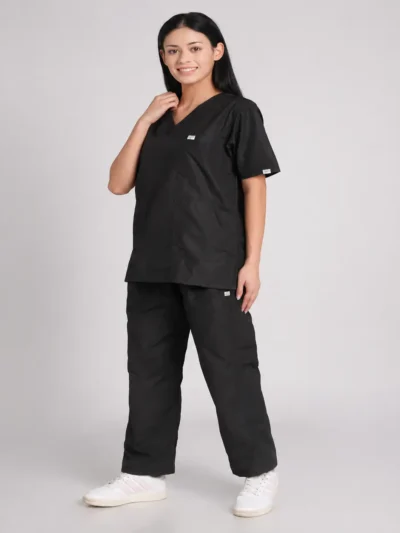
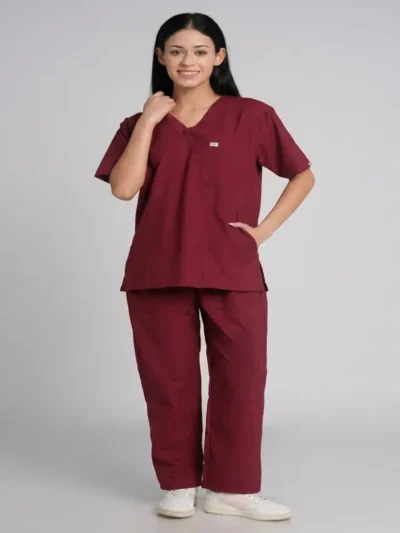
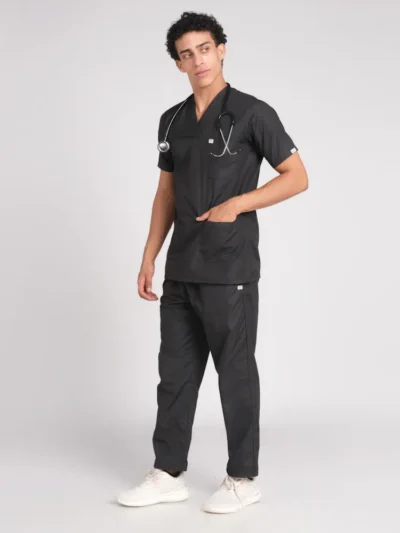
From hospital linen and bedsheets to patient uniforms, scrubs, OT linen, gowns, towels, and other medical textiles, bulk buyers can specify fabric composition, GSM, size, colour, construction, and finishing according to their requirements.
Final Recommendation
There is no single fabric that is best for every hospital.
- Choose 100% cotton when comfort and breathability are the priority.
- Choose poly-cotton when you need a balance of comfort, durability, and laundry efficiency.
- Choose casement when you need a robust cotton bedsheet fabric meeting a defined institutional specification.
For large hospital purchases, always test an approved sample through your actual laundry cycle before placing a bulk order. Healthcare procurement specifications emphasize durability, dimensional stability, colour fastness, and suitability for repeated high-temperature and disinfectant washing.
The best hospital linen is not simply the cheapest fabric—it is the fabric that delivers the lowest practical cost over its complete working life.