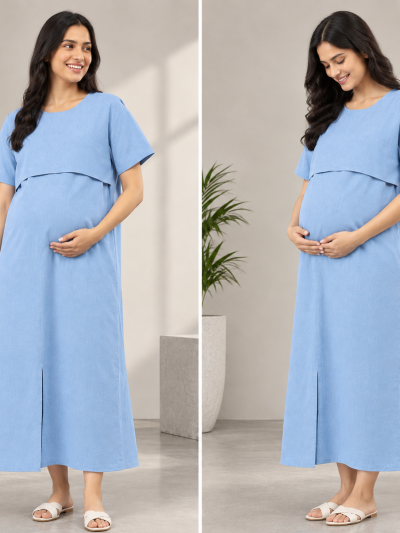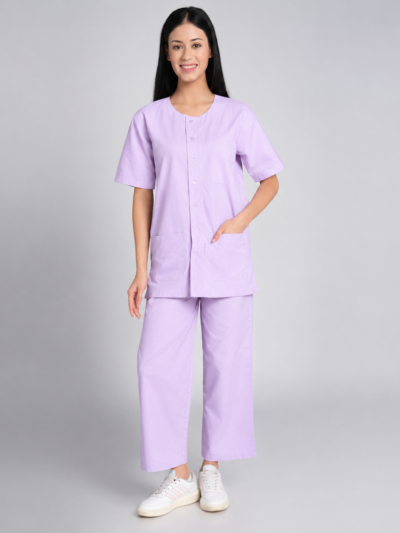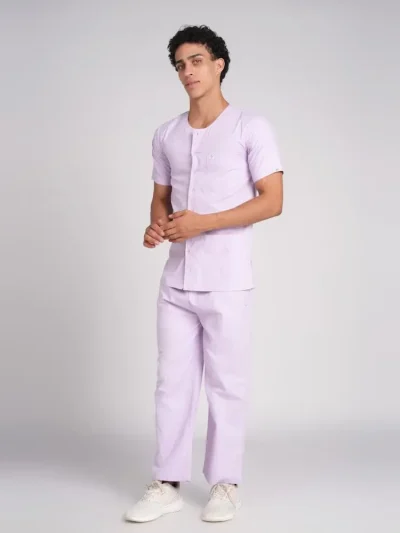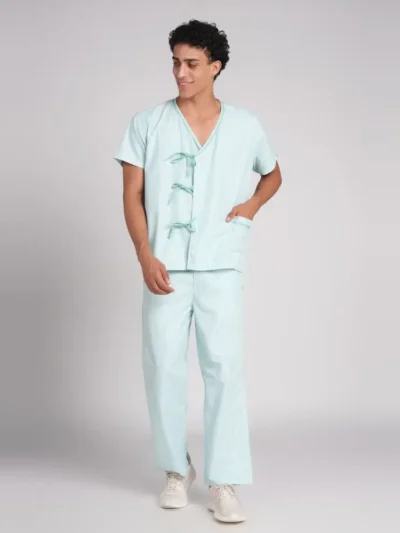


For a hospital, a nursing uniform is much more than a standard dress worn during duty hours. It is part of professional identification, workplace comfort, hospital branding and day-to-day functionality. For Hospital HR teams and Nursing Superintendents, selecting the right nursing uniform can become challenging when there are hundreds of employees, multiple departments, different shifts and frequent laundry cycles to consider. A uniform that looks good but is uncomfortable during a long shift may create staff complaints. On the other hand, a comfortable uniform that loses its colour, shape or stitching after repeated washing can increase replacement costs.
That is why hospitals need a clear nursing uniform procurement checklist before placing a bulk order. Current hospital-uniform buying guidance in India increasingly focuses on fabric performance, fit, durability, colour coding, easy maintenance and consistency across bulk orders. This guide explains the major nursing uniform requirements that HR managers, nursing superintendents, purchase departments and hospital administrators should consider.
Why Nursing Uniforms Matter in a Hospital
Nurses spend much of their working day moving between patient rooms, nursing stations, treatment areas and other departments. Their clothing therefore needs to support practical movement while maintaining a professional appearance.
A well-planned hospital nurse uniform can help with:
- Professional staff identification
- Department or role identification
- Comfortable movement during duty
- Consistent hospital appearance
- Easy washing and maintenance
- Hospital branding
- Standardized employee appearance
- Efficient bulk procurement
Uniform policies can also form part of broader workplace and infection-control procedures. Healthcare uniform guidance emphasizes that hospitals should provide appropriate work attire and establish procedures for its use, maintenance and hygiene.
However, a normal nursing uniform should not automatically be considered protective clothing or PPE. Protective clothing requirements depend on the exposure risk and clinical activity.
1. Start With the Hospital’s Uniform Policy
Before choosing a supplier, HR and nursing administration should define exactly what the hospital expects from its nursing uniforms.
The uniform policy should answer questions such as:
- What colour should nurses wear?
- Are different departments assigned different colours?
- Is the uniform a tunic-and-trouser set, salwar suit, scrub set or another approved design?
- Are aprons required?
- Should the hospital logo be embroidered?
- Is a name badge required?
- What footwear is permitted?
- Are there separate uniforms for male and female nursing staff?
- Are maternity sizes required?
- Are different uniforms required for ICU, OT or other specialized areas?
Uniform requirements can vary significantly between institutions. For example, the AIIMS New Delhi Nursing Services Manual specifies particular colours, apparel, footwear and other dress-code requirements for different nursing categories.
This is why hospitals should avoid assuming that one uniform specification works for every facility.
2. Choose Fabric for Long Hospital Shifts
One of the most important nursing uniform requirements is fabric selection.
Nurses may work extended shifts, move frequently and wash their uniforms regularly. The fabric therefore needs to balance comfort, durability and easy maintenance.
Common fabric options include:
Cotton
Cotton is known for its softness and breathability. It can be comfortable in warm environments, but hospitals should consider shrinkage, wrinkling and repeated laundering when selecting 100% cotton.
Polyester-Cotton Blends
Poly-cotton fabrics are commonly considered for institutional uniforms because they can balance comfort with durability and easier maintenance.
For example, current Indian healthcare uniform offerings commonly use polyester-cotton blends and emphasize characteristics such as colourfastness, lightweight construction and easy care.
Polyester and Performance Fabrics
Polyester-based fabrics can offer durability, shape retention and easy-care properties. However, hospitals should assess breathability and staff comfort rather than choosing a fabric only because it is durable.
Procurement tip: Ask your nursing uniform supplier for fabric composition, GSM, shrinkage information, colourfastness and wash-care instructions before approving a bulk order.
3. Prioritize Comfort and Mobility
A nursing uniform should allow nurses to perform routine activities without unnecessary restriction. Before approving a nursing uniform design, check how the garment performs when staff:
- Bend down
- Walk quickly
- Sit and stand
- Reach overhead
- Assist patients
- Move equipment
- Climb stairs
- Work for extended periods
A uniform that looks excellent on a mannequin may not perform equally well during actual hospital work. Hospital uniform planning guidance recommends assessing movement, neckline coverage, sleeve dimensions, trouser fit, waistband comfort and fabric opacity rather than evaluating appearance alone.
4. Get the Nursing Uniform Size Chart Right
Incorrect sizing is one of the easiest ways to create problems in a bulk uniform programme. Before ordering bulk nursing uniforms, collect staff measurements or conduct a structured size survey.
Consider offering a suitable range such as:
- XS
- S
- M
- L
- XL
- XXL
- 3XL
- 4XL
- Larger sizes where required
The exact size range should depend on the hospital’s workforce.
Also consider:
- Different body shapes
- Gender-specific fitting where appropriate
- Adjustable waist options
- Maternity requirements
- Petite and larger sizes
- Consistency between different production batches
Most importantly, request physical samples before approving the complete order.
5. Consider Colour Coding
Colour can be useful for quick visual identification within a hospital.
A hospital may choose different colours according to:
- Nursing designation
- Department
- Seniority
- Clinical area
- Support staff category
However, there is no single colour scheme that applies universally to every hospital. For example, AIIMS New Delhi’s nursing dress code uses dark blue for certain nursing personnel and light blue for higher nursing administrative categories. Therefore, HR teams should establish their own colour policy based on institutional requirements rather than copying another hospital’s system.
Example Colour-Coding Structure
| Staff Category | Possible Uniform Colour |
| Nursing Staff | Blue |
| Senior Nursing Staff | Light Blue |
| ICU Team | Department-specific colour |
| OT Team | Green/approved OT colour |
| Trainees | Institution-specific colour |
These are examples only. The final colour system should be established by the hospital.
6. Check Pocket and Functional Requirements
A nursing uniform needs to work as workwear.
Depending on the hospital’s policy, useful features may include:
- Practical pockets
- ID-card compatibility
- Pen storage
- Secure pocket construction
- Comfortable waistband
- Reinforced seams
- Easy-to-use closures
- Appropriate sleeve length
Avoid adding unnecessary features simply to make the uniform look more elaborate. The best hospital nurse uniform is generally one that supports the actual workflow of the nursing team.
7. Durability Matters in Bulk Nursing Uniform Procurement
Hospitals should think about cost per use, not simply the purchase price per set. A cheaper uniform may become expensive if it requires frequent replacement.
Before approving a nursing uniform supplier, ask about:
- Stitching quality
- Fabric durability
- Colourfastness
- Shrinkage
- Pilling resistance
- Seam strength
- Wash-care requirements
- Expected performance under institutional laundering
Hospital uniforms may go through substantially more washing than ordinary clothing. Current procurement guidance recommends checking how fabric performs under repeated institutional laundering and assessing colour and dimensional stability.
8. Make Laundry Requirements Part of the Purchase Decision
A uniform should be selected with the hospital’s laundry process in mind.
Discuss:
- Machine washing
- Industrial laundry
- Washing temperature
- Drying method
- Ironing requirements
- Detergent compatibility
- Colour separation
- Shrinkage
- Drying time
A fabric that performs well during normal home washing may behave differently under intensive institutional laundering. Therefore, HR and purchase teams should provide their laundry requirements to the hospital uniform manufacturer before finalizing fabric.
9. Hospital Branding and Customization
Uniforms are also an opportunity to maintain a consistent hospital identity.
Depending on the hospital’s policy, customization can include:
- Hospital logo
- Nursing department name
- Employee name
- Designation
- Department identification
- Custom colours
- Custom piping or trims
For large hospital groups, consistent branding becomes particularly useful because employees across branches can follow the same visual identity. Suppliers serving healthcare institutions commonly provide options such as logo embroidery, department identification and role-specific garment combinations.
10. Don’t Ignore Hygiene and Clinical Risk
A standard nursing uniform should be considered separately from protective garments. For routine work, hospitals may have policies covering clean uniforms, changing procedures, laundry and storage.
For activities involving potential exposure to blood or body fluids, the appropriate protective clothing should be selected based on the risk assessment and clinical protocol. CDC guidance specifically notes that employers should conduct risk assessments when selecting protective clothing for biological-fluid exposure. This distinction is important when writing hospital uniform specifications: a comfortable nursing uniform is not automatically a substitute for PPE or procedure-specific protective clothing.
HLI Hospitality Pvt. Ltd. – Nursing Uniforms for Healthcare Institutions
For hospitals looking for a reliable nursing uniform manufacturer in India, HLI Hospitality Pvt. Ltd. provides healthcare-focused uniform and hospital linen solutions. The requirement for nursing uniforms can vary from one healthcare facility to another. HLI can help institutions plan uniforms around their requirements, including fabric selection, colour, sizing, customization and bulk supply. Whether the requirement is for a hospital, clinic, diagnostic centre, research facility or educational healthcare institution, the focus should remain on practical design, comfortable fit, durable fabric and consistent quality.
Explore the HLI Hospitality Pvt. Ltd. range of healthcare uniforms and hospital linen products.