
Hospital scrubs are a daily part of health care uniforms. Doctors, nurses, surgeons and other medical professionals wear them for long working hours and so they need frequent washing. However repeated washing can sometimes cause problems such as color fading, fabric shrinking, roughness and loss of shape.
So, how to wash hospital scrubs without shrinking or fading?
The best way to care for your hospital scrubs is to ensure you adhere to the correct washing instructions, use an appropriate detergent, separate colors, avoid excessive heat and dry them properly. Proper laundry practices will help you keep your scrubs looking professional, comfortable and clean longer.
In this guide, we will explain how to wash hospital scrubs, protect their fabric, prevent colour fading, and maintain their original fit even after repeated washing.
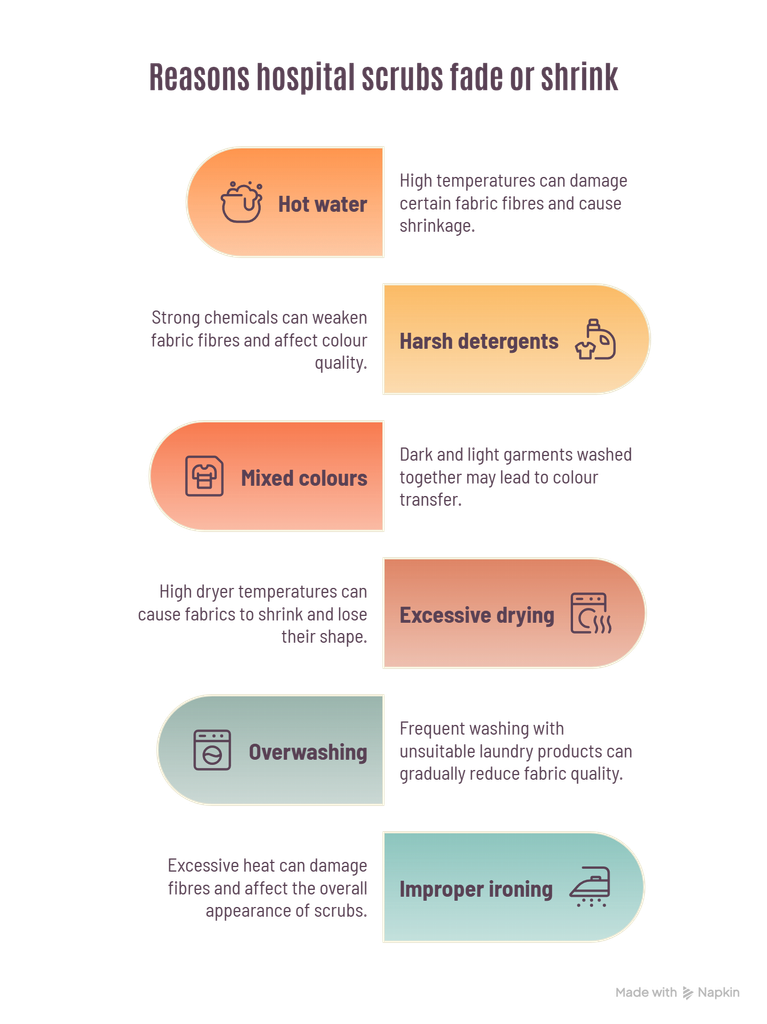
Why Do Hospital Scrubs Fade or Shrink?
Before learning the correct washing process, it is important to understand why hospital uniforms lose their original appearance.
Some common reasons include:
- Washing in hot water: High temperatures can damage certain fabric fibres and cause shrinkage.
- Using harsh detergents: Strong chemicals can weaken fabric fibres and affect colour quality.
- Mixing different colours: Dark and light garments washed together may lead to colour transfer.
- Excessive machine drying: High dryer temperatures can cause fabrics to shrink and lose their shape.
- Overwashing: Frequent washing with unsuitable laundry products can gradually reduce fabric quality.
- Improper ironing: Excessive heat can damage fibres and affect the overall appearance of scrubs.
Understanding these factors helps healthcare professionals and hospital laundry teams choose better washing methods.
8 Best Ways to Wash Hospital Scrubs Without Fading or Shrinking
1. Separate Scrubs According to Colour
One of the easiest ways to prevent colour fading and colour transfer is to separate hospital scrubs before washing.
Always keep dark-coloured scrubs separate from light-coloured garments.
For example:
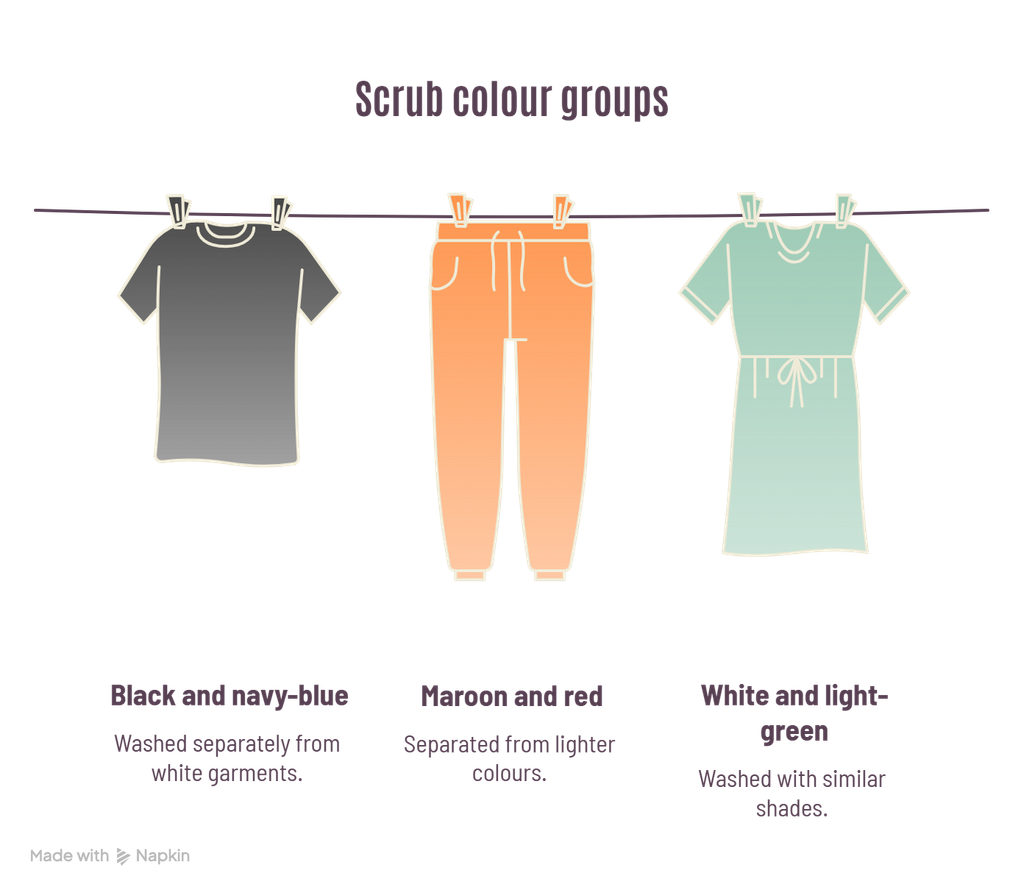
- Black and navy-blue scrubs should be washed separately from white garments.
- Maroon and red scrubs should be separated from lighter colours.
- White and light-green scrubs should be washed with similar shades.
This simple step helps maintain the original colour of your hospital uniforms and reduces the risk of colour bleeding.
2. Always Check the Fabric Care Label
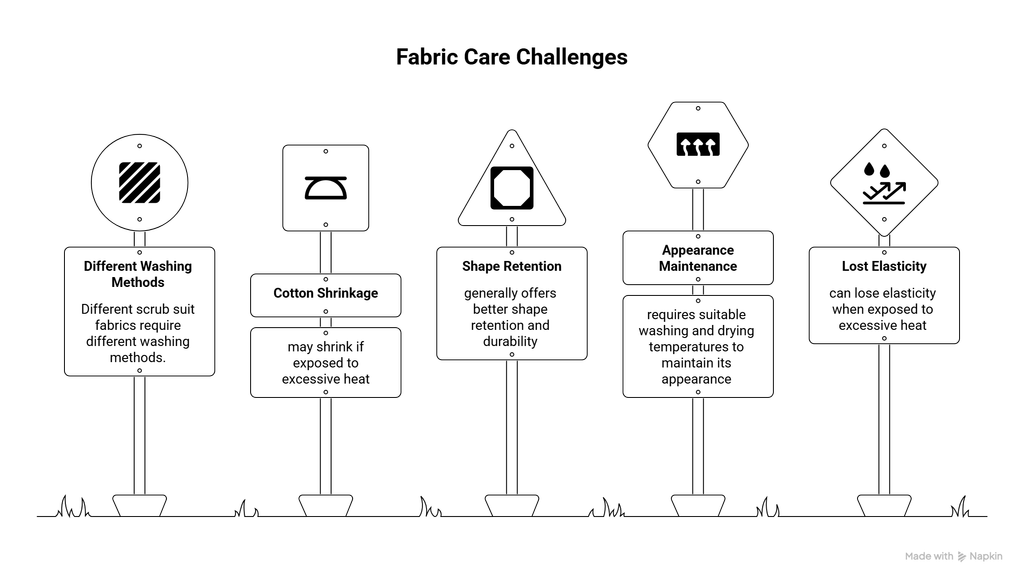
Different scrub suit fabrics require different washing methods. Before washing, check the manufacturer’s care instructions.
Common hospital scrub fabrics include:
- Cotton: Comfortable and breathable but may shrink if exposed to excessive heat.
- Polyester-Cotton: A blended fabric that generally offers better shape retention and durability.
- Polyester-Viscose: A lightweight fabric that requires suitable washing and drying temperatures to maintain its appearance.
- Stretch Fabric: Often contains elastane or spandex, which can lose elasticity when exposed to excessive heat.
Always follow the recommended washing temperature and care instructions for the specific fabric.
3. Use a Mild Laundry Detergent
Choosing the right detergent plays an important role in maintaining the quality of hospital scrubs.
Harsh detergents and excessive amounts of washing chemicals can affect fabric colour and texture over time.
For better results:
- Use a good-quality detergent suitable for the fabric.
- Avoid using excessive detergent.
- Follow the detergent manufacturer’s recommended quantity.
- Rinse properly to remove detergent residue.
- Avoid strong bleaching agents unless specifically permitted by the care label and laundry protocol.
A suitable detergent helps clean the garments while protecting their fabric quality.
4. Wash Scrubs in Cold or Lukewarm Water When Permitted
Water temperature is another important factor in preventing hospital scrubs from shrinking or fading.
For routine laundering, cold or lukewarm water is generally suitable for many coloured scrub fabrics.
High temperatures may cause shrinkage, colour loss, or damage to certain fabric blends.
However, healthcare uniforms may require specific washing temperatures for infection-control purposes. Always follow the hospital’s approved laundry protocol and the garment manufacturer’s care instructions.
Do not compromise required hygiene standards simply to protect the fabric.
5. Turn Scrubs Inside Out Before Washing
Turning hospital scrub suits inside out before washing is a simple but useful practice.
It helps reduce direct friction on the outer surface of the fabric during machine washing.
Benefits include:
- Helps protect the original fabric colour.
- Reduces surface friction.
- Helps maintain the appearance of printed or embroidered details.
- Protects the outer surface from unnecessary wear.
This is particularly helpful for coloured scrub suits that are washed frequently.
6. Avoid Excessive Use of Bleach
A lot of colored fabrics can be spoiled by bleach, which can also weaken them.
Chlorine bleach can cause uneven patches, discoloration and damage to colored scrub suits.
Instead:
- Avoid chlorine bleach on coloured scrubs.
- Use oxygen-based stain removers only when permitted by the fabric care instructions.
- Treat stains according to the hospital’s approved laundry process.
- Never mix bleach with ammonia, acids, or other cleaning chemicals.
For healthcare facilities, stain removal and disinfection procedures should always follow approved safety and infection-control guidelines.
7. Dry Scrubs at the Right Temperature
Incorrect drying methods can also cause hospital uniforms to shrink.
High dryer temperatures may affect cotton fibres, elastic components, and certain blended fabrics.
Follow these practices:
- Use a low-heat dryer setting when permitted.
- Avoid excessive tumble drying.
- Remove garments promptly after drying.
- Air-dry when appropriate and permitted by the laundry protocol.
- Avoid prolonged direct sunlight exposure for coloured garments.
Proper drying helps maintain the original size, shape, and colour of hospital scrubs.
8. Iron Scrubs Carefully
Ironing helps maintain a neat and professional appearance, but excessive heat can damage fabric fibres.
Different fabrics require different ironing temperatures.
For better results:
- Check the garment’s ironing instructions.
- Use a suitable temperature setting.
- Avoid direct high heat on synthetic fabrics.
- Iron embroidered or printed areas carefully.
- Do not iron garments that are still damp unless the care instructions allow it.
Proper ironing helps healthcare uniforms look clean, presentable, and professional.
How to Wash Different Types of Hospital Scrub Fabrics
Not all hospital scrub suits are made from the same material. Choosing the right washing method according to fabric type can help improve garment life.
| Fabric Type | Recommended Washing Practice | What to Avoid |
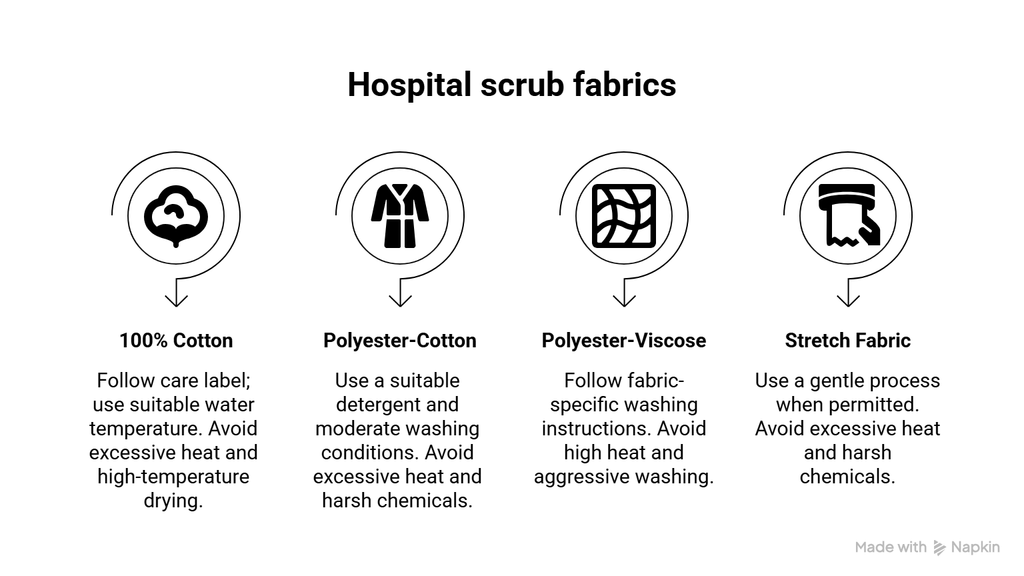
| 100% Cotton | Follow care label; use suitable water temperature | Excessive heat and high-temperature drying |
| Polyester-Cotton | Use a suitable detergent and moderate washing conditions | Excessive heat and harsh chemicals |
| Polyester-Viscose | Follow fabric-specific washing instructions | High heat and aggressive washing |
| Stretch Fabric | Use a gentle process when permitted | Excessive heat and harsh chemicals |
Important: These are general fabric-care suggestions. Hospital laundry procedures, infection-control requirements, and manufacturer instructions should always take priority.
Common Mistakes to Avoid When Washing Hospital Scrubs
Even good-quality hospital uniforms can lose their appearance if they are not washed properly.
Here are some common mistakes to avoid:
- Washing all scrub colours together.
- Using excessive detergent or strong chemicals.
- Ignoring fabric care instructions.
- Drying coloured scrubs at very high temperatures.
- Using unsuitable bleach on coloured uniforms.
- Overloading the washing machine.
- Mixing heavily soiled healthcare garments with regular household laundry.
- Ignoring hospital infection-control and laundry procedures.
Avoiding these mistakes can help maintain the quality and professional appearance of hospital uniforms.
How to Make Hospital Scrubs Last Longer
Apart from proper washing, a few additional habits can help increase the usable life of your scrub suits.
- Choose durable, good-quality fabric when purchasing hospital uniforms.
- Follow the recommended washing instructions.
- Inspect garments regularly for loose stitching and damaged seams.
- Repair minor stitching issues before they become bigger problems.
- Store completely dry uniforms in a clean and dry place.
- Maintain a proper laundry schedule.
- Follow the hospital’s approved procedures for handling and laundering used uniforms.
For hospitals and healthcare organisations, selecting suitable fabric is just as important as maintaining proper laundry practices.
Why Fabric Quality Matters When Buying Hospital Scrubs
The quality of hospital scrub suits directly affects comfort, durability and maintenance requirements.
Healthcare workers need uniforms that are comfortable to wear on long shifts and that can stand up to a lot of washing.
When selecting hospital scrubs, consider the following factors:
1. Fabric Durability: Choose fabric that can withstand regular washing without quickly losing its strength.
2. Colour Retention: Good-quality dyed fabric helps maintain its appearance through repeated laundering when cared for correctly.
3. Comfort and Breathability: Healthcare professionals often work long shifts, so breathable and comfortable fabric is important.
4. Proper Stitching: Strong stitching and quality finishing help reduce wear and tear.
5. Easy Maintenance: Select fabrics with practical washing and drying requirements suitable for your hospital’s laundry facilities.
HLI Hospitality India understands the need for comfortable, practical and durable healthcare uniforms. Our range of hospital uniforms are designed to meet the everyday requirements of health care professionals, in terms of fabric selection, comfort and finishing.
If you are in the market for doctor’s uniforms, nursing uniforms or hospital scrub suits, the right combination of fabric and construction can make a difference in day to day use.
Frequently Asked Questions About How to Wash Hospital Scrubs Without Fading or Shrinking
Find answers to common questions about this topic, including practical information, product considerations, and healthcare requirements.
How often should hospital scrubs be washed?
Hospital scrubs should be washed after every shift or use to remove sweat, bacteria, stains, and other contaminants. Regular washing helps maintain hygiene and keeps your medical uniform fresh.
What is the best way to wash hospital scrubs without fading?
To prevent fading, turn scrubs inside out, use cold or lukewarm water, choose a mild detergent, and select a gentle washing cycle. Avoid excessive use of bleach and harsh chemicals.
Can hospital scrubs shrink after washing?
Yes, hospital scrubs can shrink if washed in very hot water or dried at high temperatures. Following the recommended washing instructions and using low-temperature drying can help prevent shrinkage.
Should hospital scrubs be washed in hot or cold water?
Cold or lukewarm water is generally suitable for routine washing, depending on the fabric and care label. For healthcare-related contamination, follow your hospital’s approved laundry and infection-control guidelines.
Can I wash hospital scrubs with regular clothes?
It is best to wash used hospital scrubs separately from household clothing, especially if they are contaminated with bodily fluids or other potentially infectious materials. Follow your healthcare facility’s laundry policy.
Which detergent is best for washing medical scrubs?
A mild, colour-safe laundry detergent is generally a good choice for everyday washing. Avoid harsh detergents and excessive bleach, as they may weaken fabric fibres and cause colour fading.
How can I remove stubborn stains from hospital scrubs?
Generating…
Can hospital scrubs be washed in a washing machine?
Yes, most hospital scrubs can be machine-washed. Use an appropriate washing cycle, avoid overloading the machine, and follow the manufacturer’s washing instructions.
How do I keep coloured scrubs looking new for longer?
To maintain the original colour of your scrubs:
Wash dark and light colours separately.
Turn garments inside out before washing.
Use colour-safe detergent.
Avoid excessive heat during drying.
Do not overuse bleach or fabric softeners.
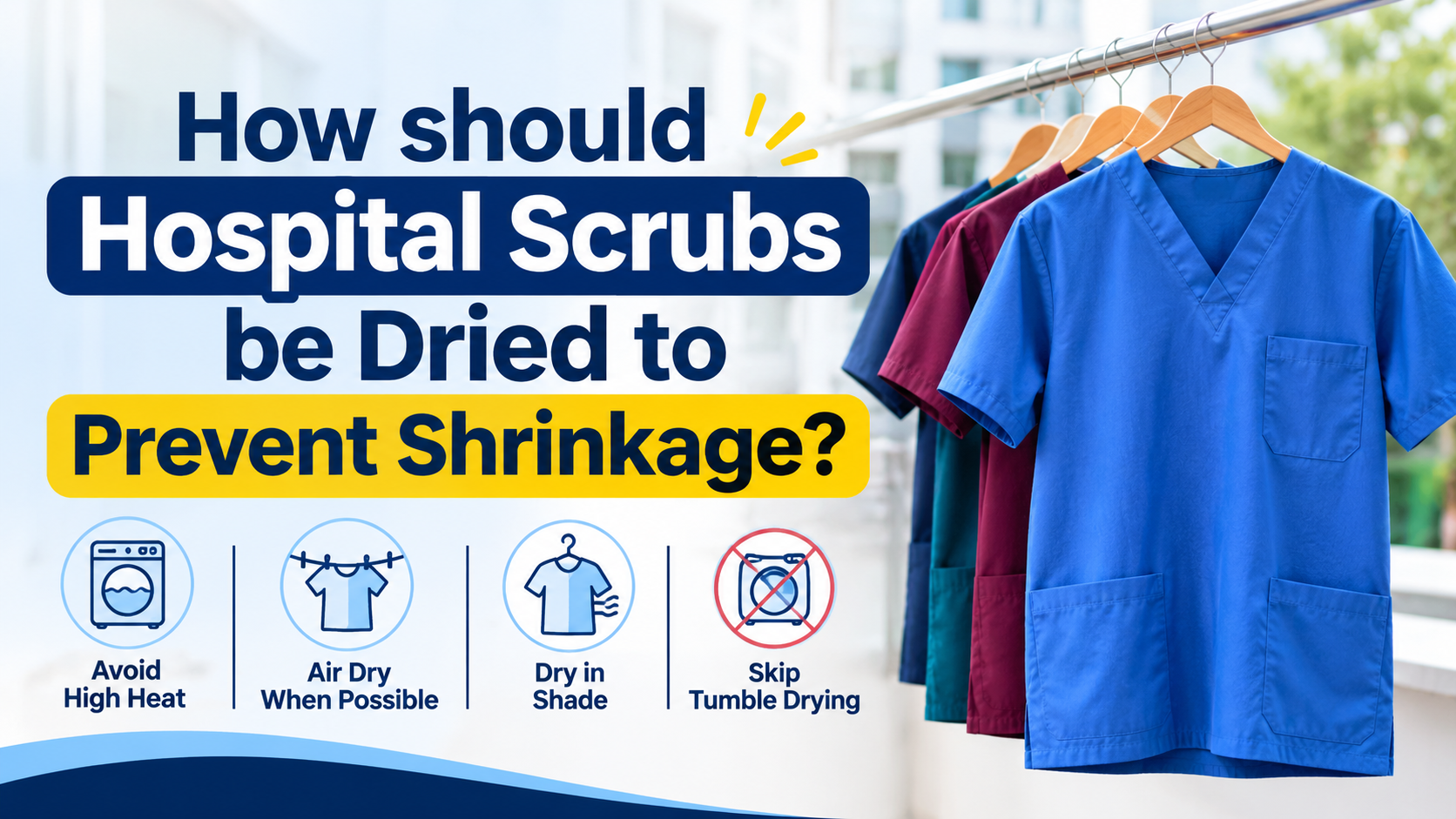
How should hospital scrubs be dried to prevent shrinkage?
Air drying is generally a good option for preventing shrinkage and protecting fabric quality. If using a dryer, select a low-heat setting according to the garment’s care label.