
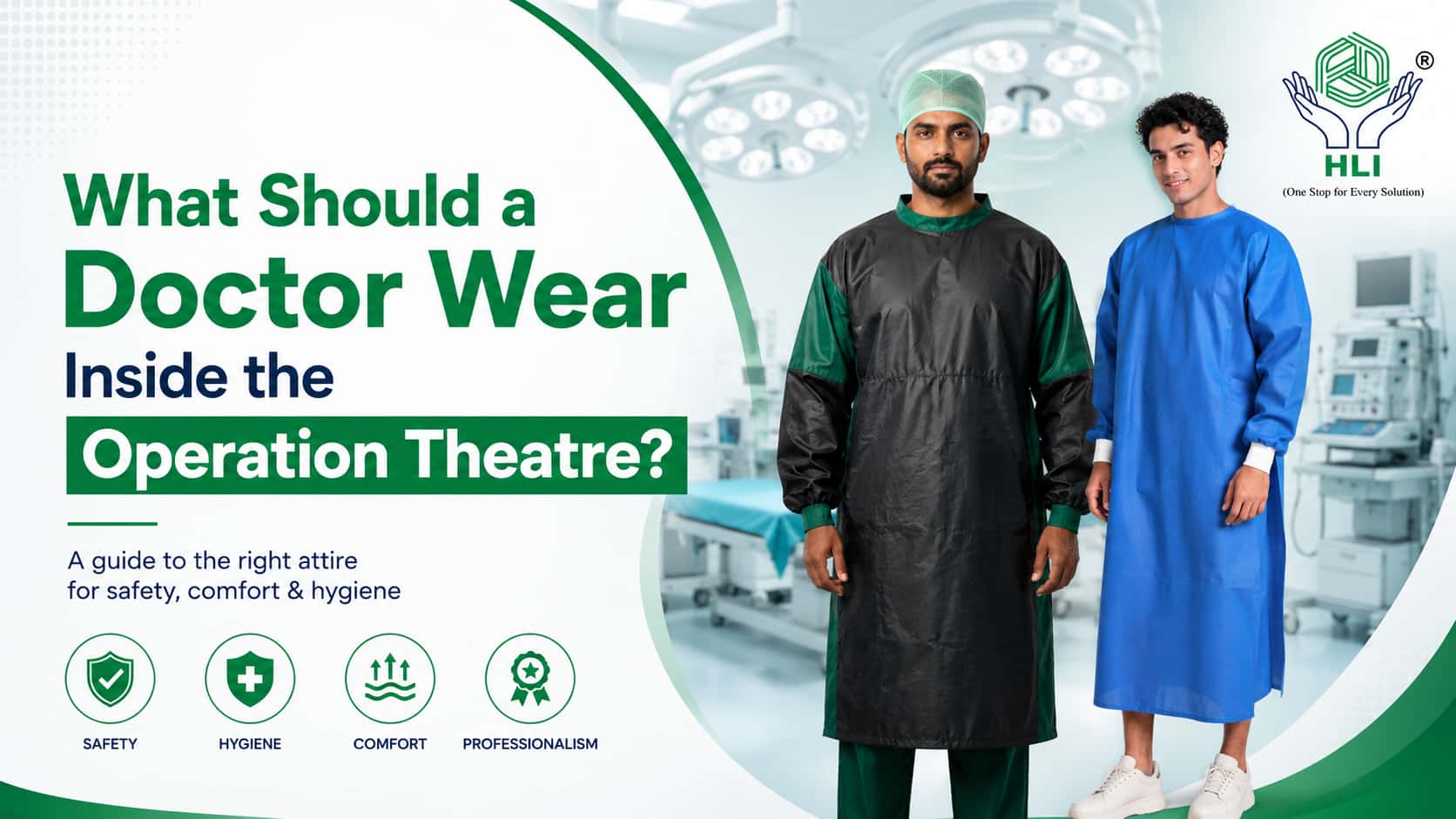
An operation theatre (OT) is a very clean and controlled area of a hospital. Doctors and other medical staff need to follow special clothing rules before entering the OT.
The right OT clothing helps maintain hygiene, gives doctors comfort during long surgeries, and supports the hospital’s infection-control practices.
So, what should a doctor wear inside the operation theatre?
Here is a simple guide.
1. Scrub Suit
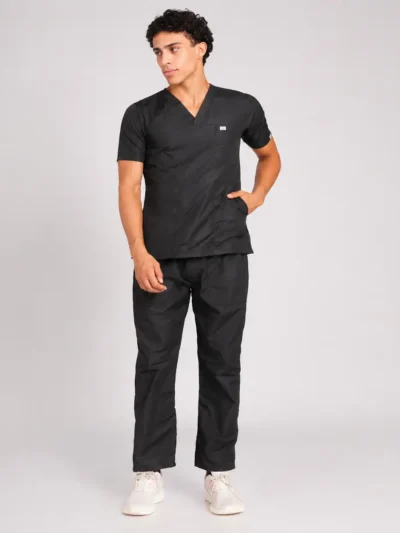
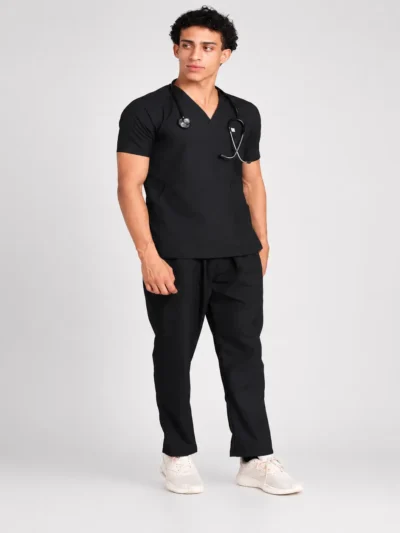
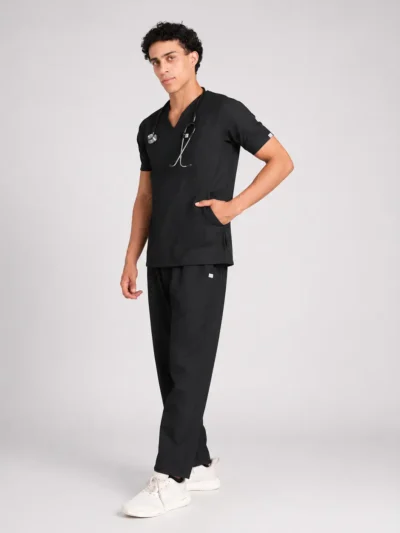
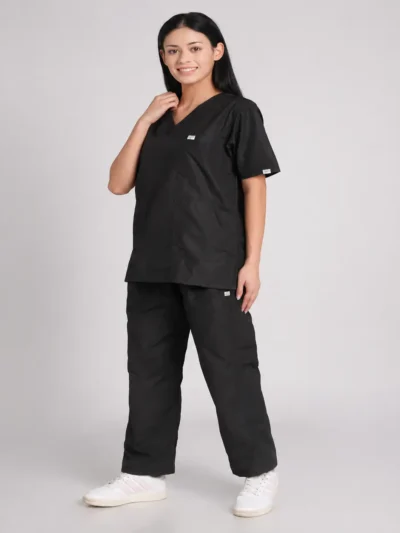
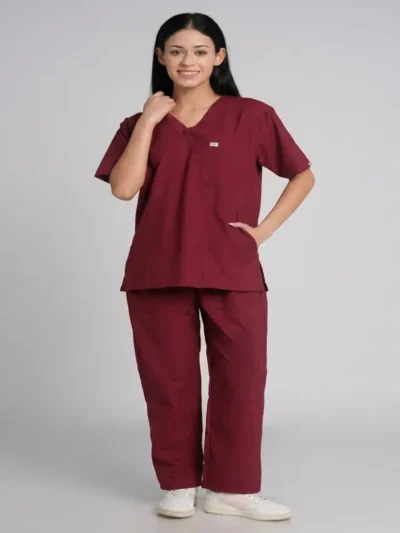
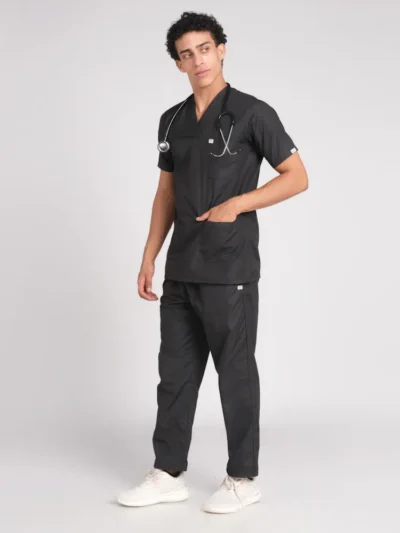
A scrub suit is usually the basic clothing worn inside an operation theatre.
It normally includes:
- Scrub top
- Scrub pants
A good scrub suit should be comfortable and allow doctors to move easily. Since doctors may spend many hours in the OT, the fabric should also be comfortable and suitable for regular washing.
When choosing scrub suits, hospitals should look at:
- Comfortable fabric
- Good fitting
- Strong stitching
- Easy washing
- Good colour quality
- Long-lasting material
2. Surgical Gown
During surgery, doctors who are part of the sterile surgical team usually wear a surgical gown over their scrub suit.
A surgical gown acts as a protective barrier and is selected according to the type of procedure and hospital requirements.
Surgical gowns can be:
- Reusable
- Disposable
- Sterile
- Fluid-resistant, depending on the requirement
Hospitals should choose gowns according to their surgery requirements and infection-control policies.
3. Surgical Cap
Doctors usually wear a surgical cap inside the OT.
The cap helps cover the hair and supports the cleanliness of the operating environment.
A good surgical cap should:
- Cover the hair properly
- Fit comfortably
- Stay in place
- Be easy to clean if reusable
Hospitals may use different types of surgical caps depending on their OT policy.
4. Surgical Mask
A surgical mask may be required inside the OT, especially during surgical procedures.
The mask should properly cover the nose and mouth.
Depending on the type of procedure and hospital rules, doctors may need additional respiratory protection.
5. Proper OT Footwear
Footwear is also an important part of OT clothing.
Doctors should use footwear that is:
- Comfortable
- Easy to clean
- Safe to walk in
- Slip-resistant
- Suitable for the hospital’s OT
The type of footwear allowed can be different from one hospital to another.
6. What Should Doctors Avoid Wearing in the OT?
Doctors should follow their hospital’s OT rules and avoid unnecessary items that can affect hygiene.
These may include:
- Outdoor clothes
- Jewellery
- Watches
- Open footwear
- Unnecessary accessories
The hospital may also have specific rules about what can be worn under the scrub suit.
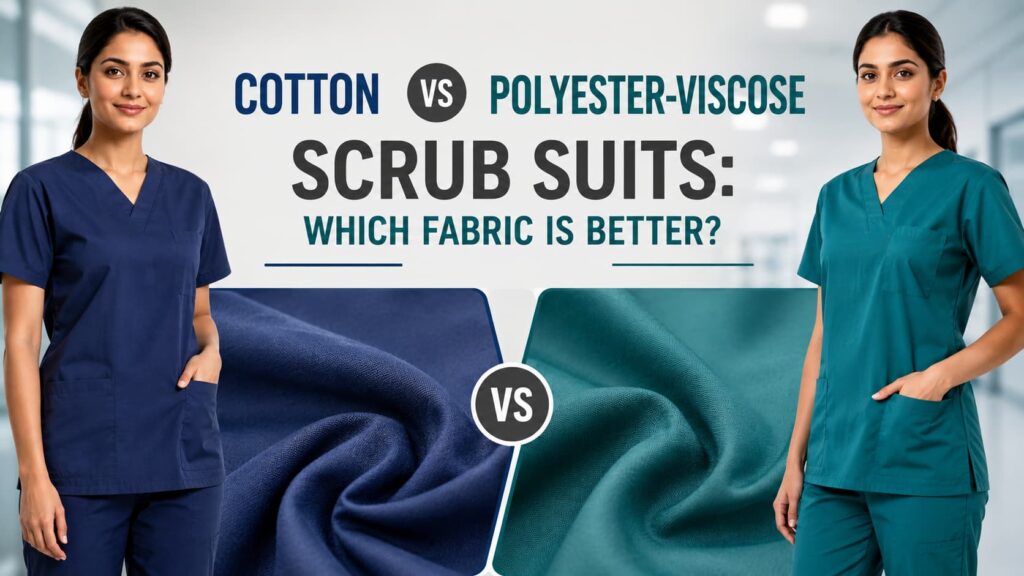
7. Why Is the Scrub Suit Fabric Important?
Doctors can spend several hours inside an operation theatre. Because of this, the fabric of the scrub suit is very important.
A good scrub suit should be:
Comfortable + Breathable + Durable + Easy to Wash
Two commonly used options are cotton and polyester-viscose blends.
Cotton Scrubs
Cotton is soft and comfortable. It can be a good option for doctors who prefer a natural-feeling fabric.
However, hospitals should also consider washing, drying, shrinkage, and durability.
Polyester-Viscose Scrubs
Polyester-viscose blends are popular for healthcare uniforms because they are generally durable and easy to maintain.
The best fabric depends on the hospital’s requirements, laundry process, budget, and staff comfort.
8. Comfort Matters During Long Surgeries
Some surgeries can take several hours. During this time, doctors may need to stand and move around continuously.
An uncomfortable scrub suit can make the work more difficult.
Therefore, hospitals should choose scrubs that provide:
- Good fitting
- Easy movement
- Comfortable fabric
- Proper ventilation
- Good durability
9. Are OT Scrubs Different From Regular Hospital Uniforms?
In many hospitals, OT scrubs are managed separately from regular hospital uniforms.
This helps hospitals maintain separate procedures for:
- Changing clothes
- Washing
- Storage
- OT entry
- Staff uniforms
Some hospitals also use a specific colour for OT scrubs.
The exact rules depend on the hospital’s infection-control policy.
10. Simple OT Clothing Checklist
Before entering the operation theatre, a doctor may need:
- Clean scrub suit
- Surgical gown, when required
- Surgical cap
- Surgical mask, when required
- Appropriate OT footwear
- Other protective equipment required for the procedure
Doctors should always follow their hospital’s specific OT guidelines.
11. What Should Hospitals Look for When Buying OT Clothing?
Hospitals usually purchase scrub suits and OT clothing in large quantities. Therefore, choosing the right supplier is important.
Before placing an order, hospitals should check:
Fabric Quality
The fabric should be comfortable and able to handle regular hospital washing.
Stitching Quality
Strong stitching can help the garment last longer.
Sizes
The supplier should provide enough sizes for different members of the medical team.
Colour
The colour should remain consistent even after repeated washing.
Shrinkage
Hospitals should check whether the fabric is likely to shrink after washing.
Laundry Compatibility
The clothing should be suitable for the hospital’s laundry process.
Supply Capacity
For bulk orders, the supplier should be able to provide consistent quality and timely delivery.
Frequently Asked Questions
Can doctors wear normal clothes inside the OT?
Usually, doctors change into the OT clothing required by their hospital before entering the operation theatre. The exact rules depend on the hospital.
Is a scrub suit the same as a surgical gown?
No. A scrub suit is the basic OT clothing, while a surgical gown is worn over it during surgery when required.
What colour should OT scrubs be?
There is no single colour used by every hospital. Hospitals can choose colours according to their own policies and department requirements.
Which fabric is best for OT scrubs?
There is no single best fabric for every hospital. Cotton and polyester-viscose blends are common choices. Hospitals should consider comfort, durability, washing requirements, and cost.
Can surgical gowns be reused?
Some surgical gowns are designed for reuse. Reusable gowns must be properly processed and maintained according to hospital procedures.
Conclusion
The right clothing is an important part of working inside an operation theatre. A doctor may need a clean scrub suit, surgical gown, surgical cap, mask, and suitable footwear, depending on the procedure and hospital rules.
For hospitals, choosing good-quality OT clothing means looking at comfort, fabric, stitching, durability, sizing, washing, and supply reliability.
The main goal is simple: provide doctors with comfortable and suitable OT clothing while following the hospital’s infection-control requirements.
Hospitals and healthcare facilities looking for scrub suits, surgical gowns, OT linen, patient dresses, and other hospital apparel should choose products that match their daily requirements and can handle regular hospital use.