
Choosing the right hospital linen supplier is more than finding the lowest price. For hospitals, nursing homes, clinics, and healthcare facilities, linen directly affects patient comfort, hygiene, laundry operations, staff efficiency, and overall service quality.
From patient bed sheets and pillow covers to OT sheets, surgical gowns, towels, blankets, draw sheets, and other healthcare textiles, every product needs to meet the hospital’s specific requirements. A supplier who offers attractive prices but inconsistent quality or unreliable delivery can create much bigger costs in the long run.
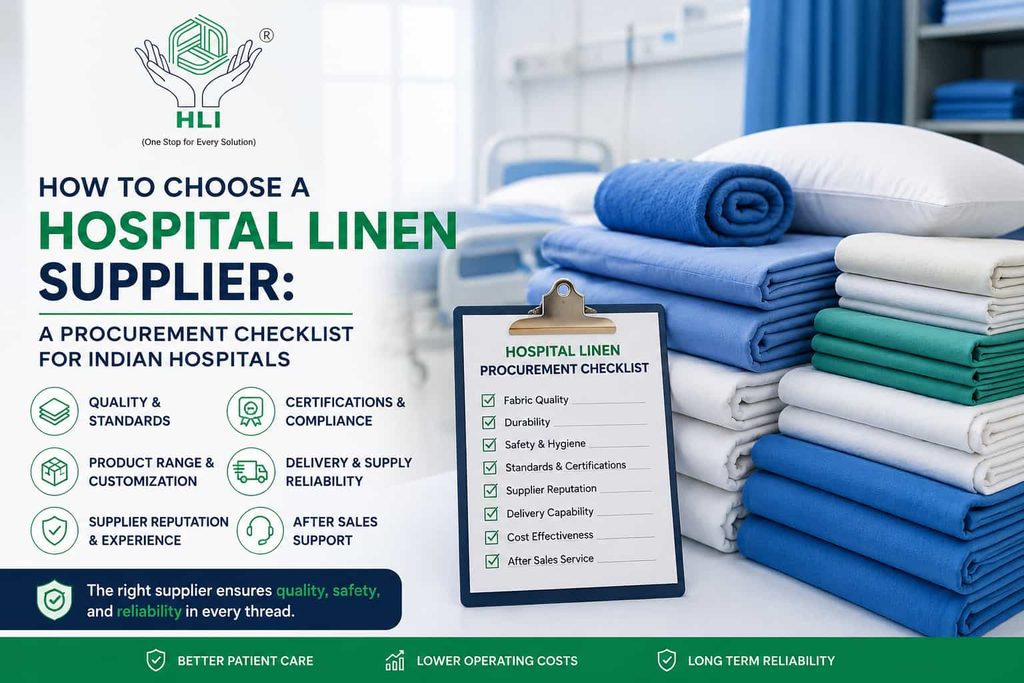
That is why hospital procurement teams should evaluate quality, specifications, durability, compliance, production capacity, delivery reliability, and after-sales support before finalizing a supplier.
This hospital linen supplier procurement checklist will help Indian hospitals make a more informed purchasing decision.
Why Choosing the Right Hospital Linen Supplier Matters
Hospital linen goes through much more demanding use than ordinary household textiles. Bed sheets and towels may be washed repeatedly, while OT linen and surgical textiles may have specific requirements related to construction, sterilization, color, and performance.
Indian government hospital tenders demonstrate how detailed these requirements can be. For example, recent ESIC specifications have included exact bed-sheet dimensions, cotton composition, thread count, colors, and hospital-specific markings.
Similarly, hospital procurement documents can specify Indian Standards, fabric weight, dimensions, workmanship, and product-specific requirements.
A dependable supplier should therefore be able to provide products that consistently match the agreed specification—not just a good-looking sample.
Hospital Linen Supplier Procurement Checklist
A manufacturer with established production facilities may offer better control over fabric quality, stitching, finishing, customization, and production schedules.
Ask the supplier about:
- Manufacturing facility and location
- Production capacity
- In-house stitching and finishing
- Quality-control process
- Experience with hospital or institutional orders
- Ability to handle bulk requirements
- Previous healthcare clients or institutional projects
For large hospital orders, production capacity is particularly important. A supplier may provide excellent samples but struggle to maintain the same quality across thousands of pieces.
Evaluate Fabric Quality, Not Just Appearance
A linen product can look excellent when new and still perform poorly after repeated washing.
For hospital use, evaluate the fabric for:
Durability: Can it withstand frequent industrial washing?
Shrinkage: Does the product maintain its usable dimensions after washing?
Colorfastness: Does the color remain stable after repeated washing?
Fabric strength: Can the material withstand regular handling and laundering?
Comfort: Is the fabric suitable for prolonged patient contact?
Finish: Is the product free from obvious defects, loose threads, stains, holes, or uneven stitching?
Ask for product samples and, where appropriate, test reports before approving a bulk order.
Always Request Samples Before Bulk Purchase
A sample is one of the most useful tools in hospital procurement.
Before placing a large order, request samples of the actual product and check:
- Fabric quality
- Dimensions
- Weight
- Colour
- Stitching
- Seam strength
- Finishing
- Logo or hospital marking
- Packaging
- Overall workmanship
If possible, test the sample through your normal laundry process before approving the supplier.
Some Indian hospital tenders specifically require advance samples for technical evaluation before an order is awarded.
Compare Suppliers on Total Cost, Not Only Price
The cheapest quotation is not always the most economical option.
Imagine two suppliers:
Supplier A: Lower purchase price but shorter product life and inconsistent sizing.
Supplier B: Slightly higher price but better fabric, stitching, durability, and repeat-order consistency.
If Supplier B’s products last significantly longer, the actual cost per use may be lower.
When comparing quotations, consider:
Total Cost of Ownership = Purchase Price + Logistics + Washing/Replacement Cost + Quality Losses + Other Applicable Costs
Also compare suppliers at exactly the same specifications. A lower price may simply mean that the quotation uses a lighter fabric, different composition, smaller dimensions, or different construction.
Understand the Supplier’s Laundry and Durability Claims
Hospital linen is exposed to repeated laundering, detergents, heat, handling and storage.
Ask the supplier what the product is designed to withstand and whether they can provide supporting test information for claims relating to:
- Shrinkage
- Colourfastness
- Fabric strength
- Dimensional stability
- Wash durability
Avoid choosing a product purely because it feels soft or looks premium when new. Hospital procurement should focus on how the linen performs throughout its working life.
Ask About Replacement and Complaint Handling
Even with good quality control, issues can occasionally occur.
Before placing an order, ask:
What happens if defective products are delivered?
A reliable supplier should have a clear process for:
- Reporting defects
- Product inspection
- Replacement
- Short-supply claims
- Incorrect specifications
- Damaged goods
- Delivery issues
Do not wait until a problem occurs to discover that the supplier has no replacement policy.
Check the Supplier’s Experience With Healthcare Institutions
Experience matters because hospital linen procurement is different from ordinary textile purchasing.
A supplier experienced in healthcare should understand requirements related to:
- Hospital bed linen
- OT linen
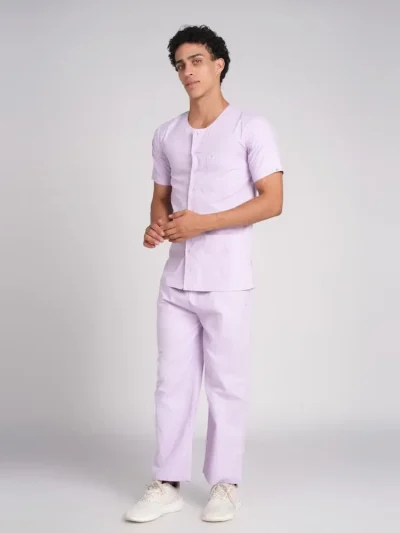
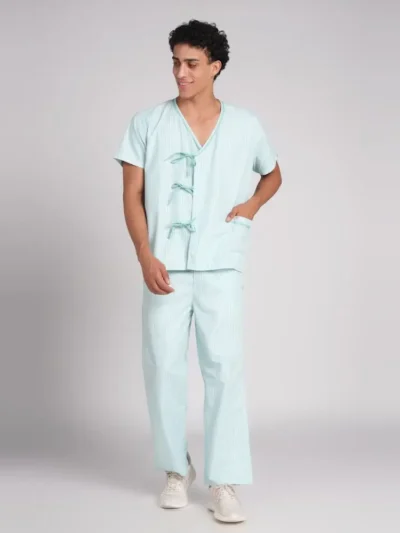
- Patient clothing
- Staff clothing
- Towels
- Blankets
- Draw sheets
- Surgical drapes
- Hospital-specific colour coding
- Bulk institutional supply
Ask for examples of previous institutional projects where appropriate.